
Beagle Nutrition Essentials
Beagles are built to last. With a sturdy, compact frame, a disease-resistant constitution relative to many pedigree breeds, and an energy reserve that seems to defy their size, the Beagle has the biological foundations for a genuinely long life. The median Beagle lifespan sits at 12–15 years, with well-cared-for individuals regularly reaching 16 and beyond. Nutrition is one of the most powerful levers for making those extra years happen.
Here is the challenge. Beagles are extraordinarily food-motivated. Their noses were bred to track scent over miles of countryside, and that same extraordinary olfactory system means they live in a world of food signals that most dogs simply cannot detect. They will find the treat you dropped three days ago. They will smell the difference between two apparently identical kibble formulas. And they will eat past the point of fullness with a cheerfulness that makes portion discipline genuinely difficult.
Beagle nutrition requires you to be the intentional one — because your Beagle certainly won't be. This guide is for Beagle lovers who want their food-driven, cheerful hound to stay active and full of personality well into their mid-teens, by making intentional nutrition choices that promote healthy ageing from the very first meal. The science here is accessible, the frameworks are practical, and the outcome — a merry, mobile 14-year-old Beagle — is well within reach.
 QUICK ANSWER
What are the essentials of beagle nutrition for a long, healthy life?
Beagle nutrition for longevity centres on portion discipline, life-stage appropriate macro-nutrients, and breed-specific supplementation. Beagles' exceptional food drive makes obesity their primary health risk. A structured feeding schedule, measured portions, high-quality protein, and omega-3 and joint supplements from middle age onward are the foundational tools for building a 15-year companion.
Understanding the Beagle’s Nutritional Personality
Before any diet recommendation makes sense, it helps to understand the biological and behavioural context that makes beagle nutrition genuinely different from feeding most other breeds.
The Beagle was developed over centuries as a scent hound — bred to track game for hours over varied terrain, working on a fraction of the caloric support that a modern pet receives. That evolutionary history has produced a dog with three nutritionally significant characteristics: a high reward value for food, a metabolically efficient body that extracts more energy per calorie than many breeds, and a regulatory system that does not reliably signal satiety.
Hyper-palatable food is a particular risk. Beagles are more likely than most breeds to overeat when offered calorie-dense, flavourful food — and commercial dog foods are specifically formulated for palatability. This is not a character flaw; it is breed biology.
Smell drives appetite. A Beagle's olfactory system is estimated to be between 10,000 and 100,000 times more sensitive than a human's. Food smells — whether from your plate, the bin, or a dropped treat from last week — register as active feeding cues. Managing the food environment is as important as managing the bowl.
Energy efficiency compounds caloric excess. A Beagle on a standard adult diet formulated for a generic 10 kg dog may be receiving more usable energy than its body requires for maintenance — particularly if exercise is limited. The gap between what goes in and what gets burned accumulates in grams per week, invisibly, until the scale confirms the problem.
Understanding this nutritional personality is the starting point for every feeding decision that follows.
Beagle Puppy Diet
The First Year
The first twelve months of a Beagle's life are a period of rapid physical and neurological development that requires nutritional support proportionate to the growth rate — which, for a breed typically reaching 9–11 kg at maturity, is significant relative to starting weight.
What a diet for Beagle puppies must provide
- Sufficient protein for muscle, organ, and immune system development: minimum 22% DM, with optimal growth typically supported at 28–30% DM from high-quality animal sources.
- Appropriate calcium and phosphorus: the Beagle is a small-to-medium breed, and standard puppy formulas (not large-breed formulas) provide the correct Ca:P ratios and mineralisation rates for this size range.
- DHA for neurological and visual development: look for marine-sourced DHA in the ingredient list — diets including salmon oil, fish meal, or explicitly listed DHA show better cognitive development outcomes in the first 8 weeks than those without.
- AAFCO compliance for growth or all-life-stages — the minimum qualification for any diet entering your puppy's bowl.
Feeding amounts for Beagle puppies:
Age Daily Meals Approximate Daily Amount (dry kibble)
8–12 weeks 3 - 4 440–55 g, divided
3–5 months 2 - 3 360–85 g, divided
5–12 months 2 380–115 g, divided
These are starting points. Monitor weight weekly in the first three months and adjust based on BCS, not on appetite. A Beagle puppy that always appears hungry is operating normally — it is not necessarily underfed.
The foundation laid before your puppy arrives
The nutritional platform a Beagle puppy brings to its new home reflects the feeding decisions made during breeding, gestation, and weaning — epigenetic influences that shape immune function, metabolic programming, and digestive resilience before birth. The full science of this is covered in Advanced Puppy Nutrition for Breeding Programs on PemberDiamonds, which explains how responsible breeders build health into puppies before they ever eat their first solid meal.
See also our Complete Guide to the Beagle for a full overview of the breed, from puppy preparation through to adult care.
Adult Beagle Nutrition
Building for the Long Game
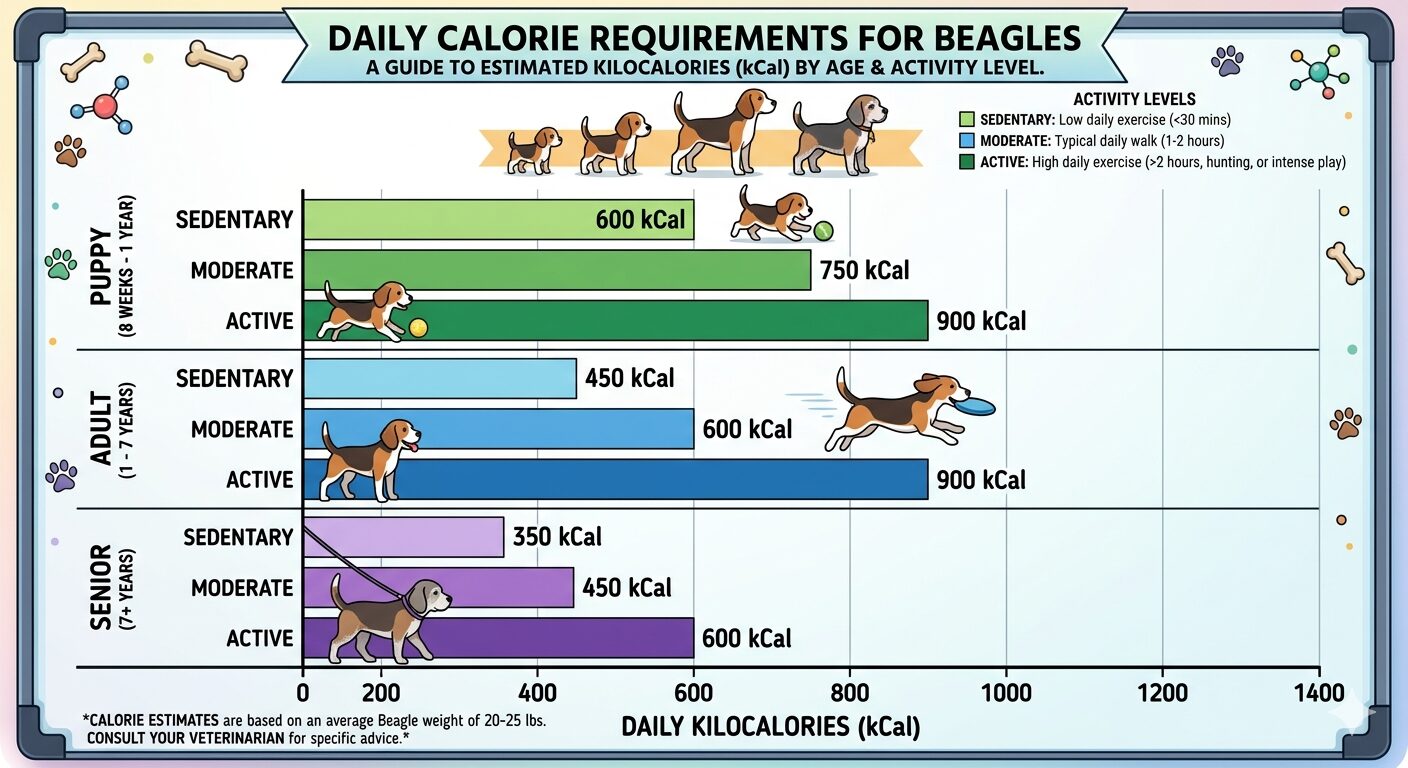
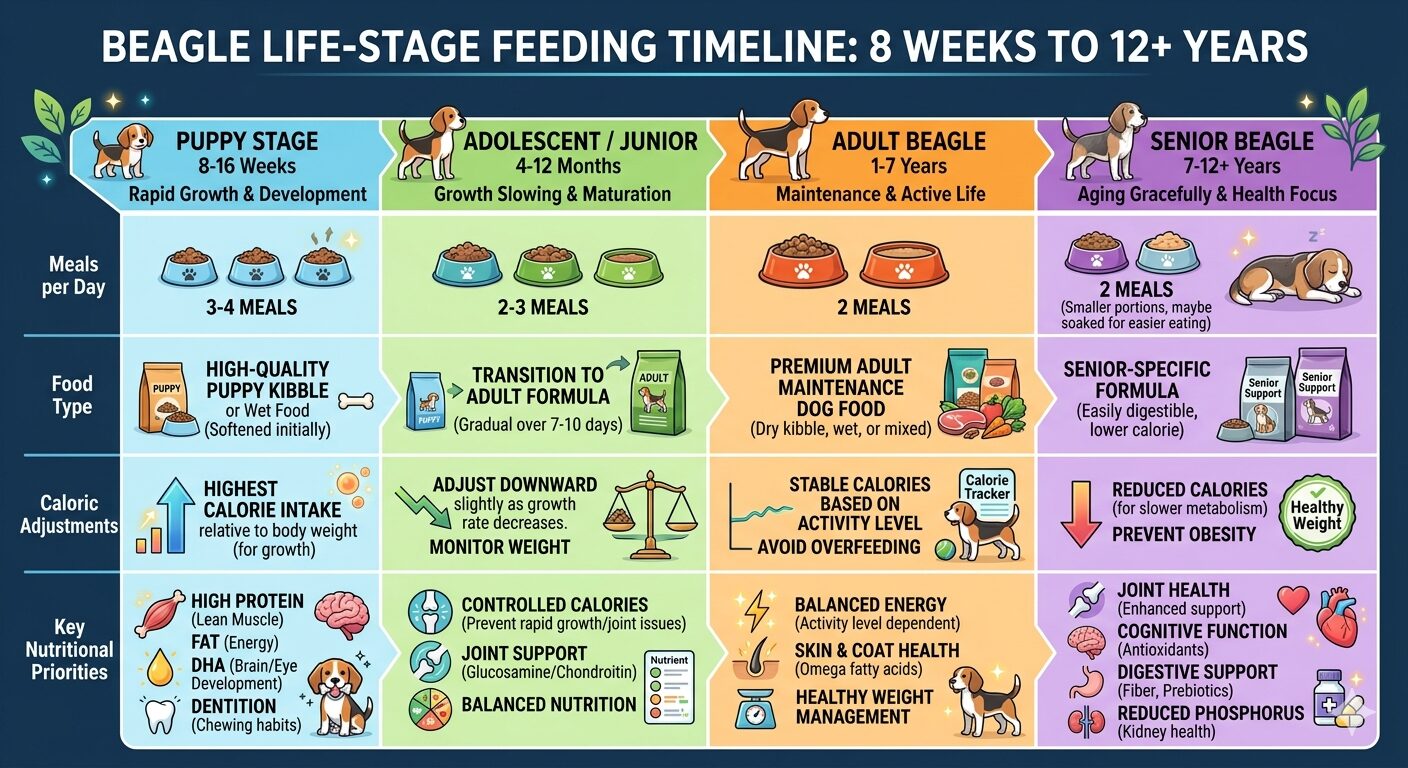
The transition to adult feeding — typically at 12 months for Beagles — marks the point at which maintenance nutrition replaces growth nutrition. It is also the point at which the seeds of the most common Beagle health problems are sown, if portion discipline does not adjust to match the reduced caloric needs of a physically mature dog.
Adult beagle nutrition priorities:
Switching from puppy to adult food
Transition over 7–10 days: begin with 75% puppy formula / 25% adult formula, and shift by 25% every two to three days. An abrupt switch is the most common cause of gastrointestinal upset in dogs moving between formulas — and in a food-sensitive breed like the Beagle, digestive disruption should be minimised wherever possible.
Activity LevelDaily Caloric Estimate (9–11 kg Beagle)Sedentary (minimal exercise)490–560 kcalModerate (30–45 min daily)580–680 kcalActive (regular scent work, hiking, field exercise)700–850 kcal
Feeding Schedule and Portion Control
The feeding schedule is not a minor logistical detail for Beagles — it is the primary management tool for the breed's most significant nutritional risk. Free-feeding (leaving food available at all times) is contraindicated for Beagles. It removes portion control entirely and exploits the breed's absence of reliable satiety signalling.
Portion measurement
Use a kitchen scale, not a measuring cup. Volume measurements are unreliable across kibble sizes and shapes — a cup of small-kibble puppy food contains significantly more calories than a cup of large-kibble adult food. Weigh the daily ration, split it into the appropriate number of meals, and adjust monthly based on body condition assessment.
Bowl management
Pick up the bowl immediately after each meal. If your Beagle has not finished within 15–20 minutes, remove the food and offer it at the next scheduled meal. This prevents the development of grazing habits and reinforces the scheduled feeding pattern. It also means uneaten food does not attract insects or spoil.
Preventing Obesity in Beagles
The Core Challenge
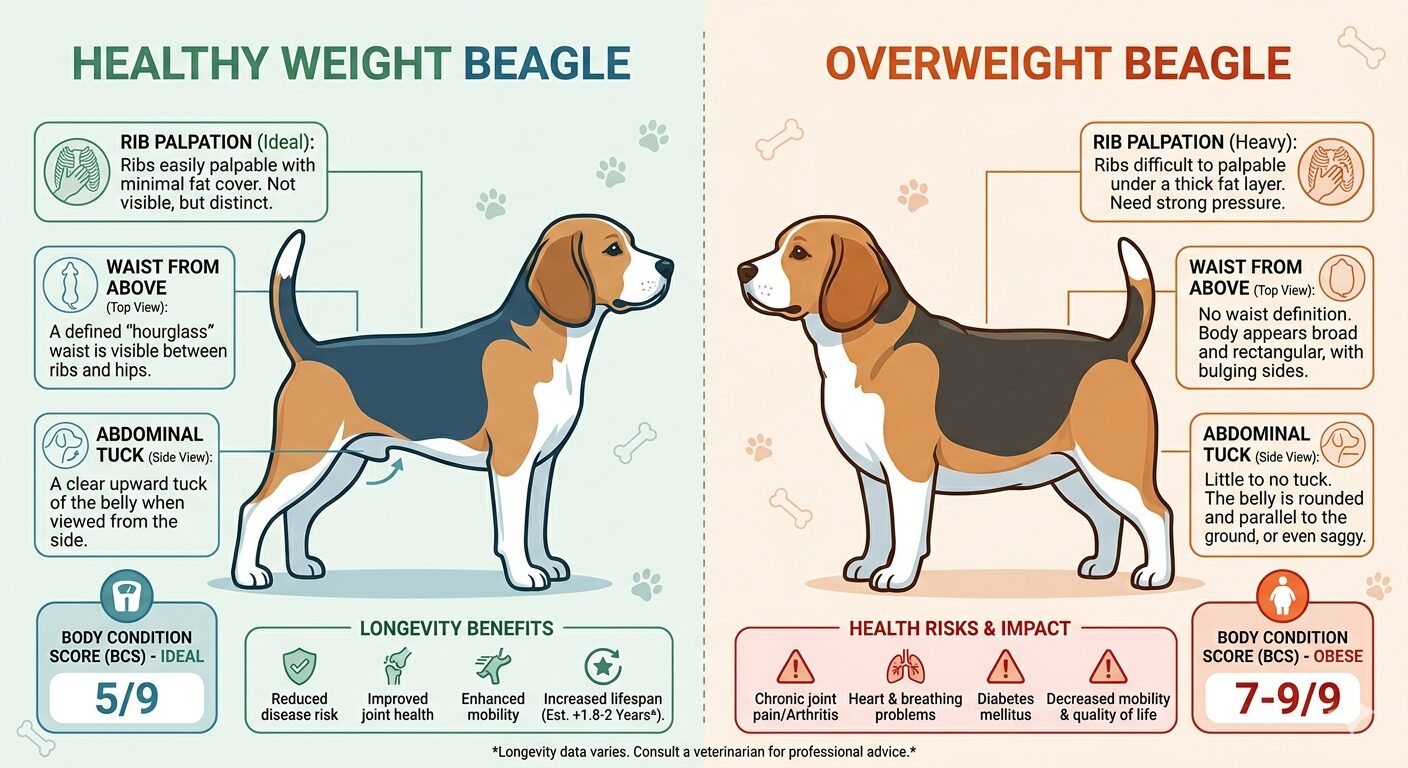
Obesity is the single most significant preventable health risk in the Beagle, and it compounds over time in ways that directly undermine the longevity goal at the heart of this guide. A Beagle that spends its middle years carrying excess weight arrives at its senior years with compromised joints, reduced organ function reserve, and a shortened lifespan — regardless of the quality of food in its bowl.
The numbers
Estimated 40–60% of adult dogs in developed countries are overweight or obese. Beagles are overrepresented in this figure relative to the general dog population.
A 10 kg Beagle carrying 1.5 extra kilograms is 15% above optimal weight — in human equivalent terms, approximately 11.5 extra kilograms on a 75 kg person.
Obese dogs have a significantly shorter median lifespan than those maintained at optimal weight, with quality-of-life implications beginning well before the final years.
Practical obesity prevention framework
- Monthly BCS assessment. At healthy weight, you can feel the Beagle's ribs easily with light pressure but not see them prominently. There should be a visible waist taper when viewed from above and an abdominal tuck from the side.
- Secure the environment. Beagles are highly motivated food seekers. Childproof bin latches, secure storage for all food and treats, and management of counter-surfing opportunities are environmental controls as important as portion management.
- Caloric accounting. Account for ALL calories — meals, treats, training rewards, and food consumed during walks or exploration. The Beagle's world is full of supplementary calories that the bowl count never captures.
- Exercise as an adjunct. Exercise supports weight management and mental health — scent work in particular provides enriching, low-impact stimulation. See The Nose Knows: Structured Enrichment for Beagles for a practical scent-work programme that uses the Beagle's greatest strength in its service.
Data point
Research published in Veterinary Medicine: Research and Reports identifies Beagles as one of the ten breeds with the highest obesity prevalence in veterinary practice — a finding replicated across multiple large-scale canine health surveys.
Breed-Specific Diet Considerations for Beagles
Beagle nutrition is not identical to generic small-to-medium dog nutrition. The breed's scent hound heritage, metabolic efficiency, food drive, and specific health tendencies create a distinctive nutritional profile.
Protein requirements
Beagles are muscular for their size, with a compact, athletic build designed for endurance. Protein is the nutritional substrate for that muscle mass — and muscle mass is the primary determinant of resting metabolic rate. Maintaining adequate protein (22–26% DM in adults) preserves muscle, supports a slightly higher metabolic rate, and reduces the caloric efficiency that makes Beagles prone to weight gain.
Joint health — a longevity factor
The Beagle's working history involves sustained, low-impact movement over variable terrain. Their joints are built for it — but sustained weight-bearing over a long life creates cumulative wear on cartilage, particularly in the hips and elbows. Breed-specific nutrition that includes omega-3 fatty acids, glucosamine, and anti-inflammatory support maintains joint health in the middle and later years.
Ear health and diet
Beagles' long, floppy ears create an environment prone to otitis (ear infections) — and recurrent ear infections in Beagles are frequently associated with food sensitivities or environmental allergies. If your Beagle has chronic ear problems that do not resolve with topical treatment, a protein source trial (switching to a novel protein such as duck, venison, or fish) under veterinary guidance may be warranted. Diet is not always the cause, but it is always worth investigating.
The scent hound gut
Beagles have robust digestive systems suited to processing varied food sources — an adaptation of their working history. This means they tolerate dietary variety reasonably well, making food transitions less traumatic than in more sensitive breeds. It does not mean their digestive system is invulnerable; high-fat treats, table scraps, and scavenged food still carry pancreatitis and gastrointestinal upset risk.
Healthy Treats for a Food-Motivated Breed
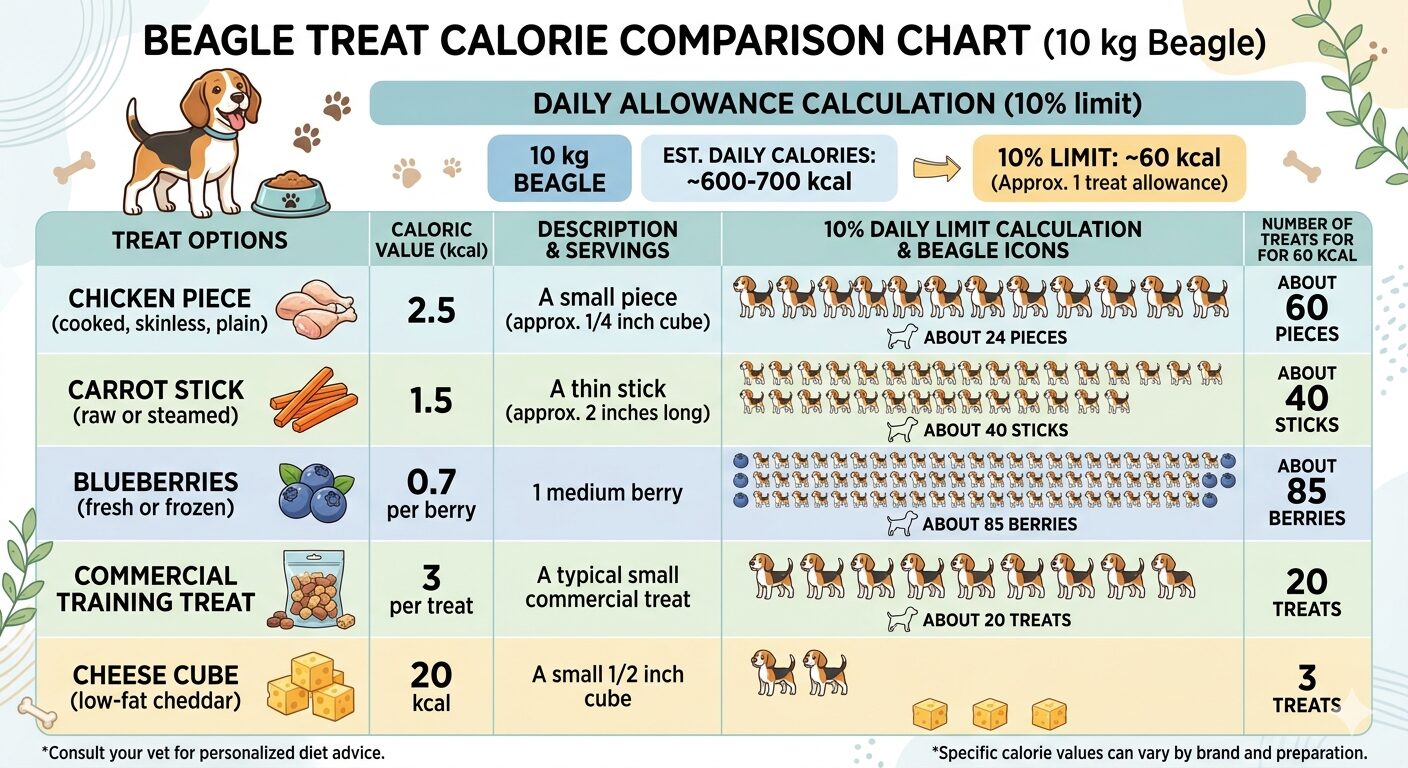
Treats are an essential tool for Beagle training, enrichment, and the human-dog bond — but they require the same nutritional discipline as the main bowl. The 10% rule applies: treats should not exceed 10% of daily caloric intake.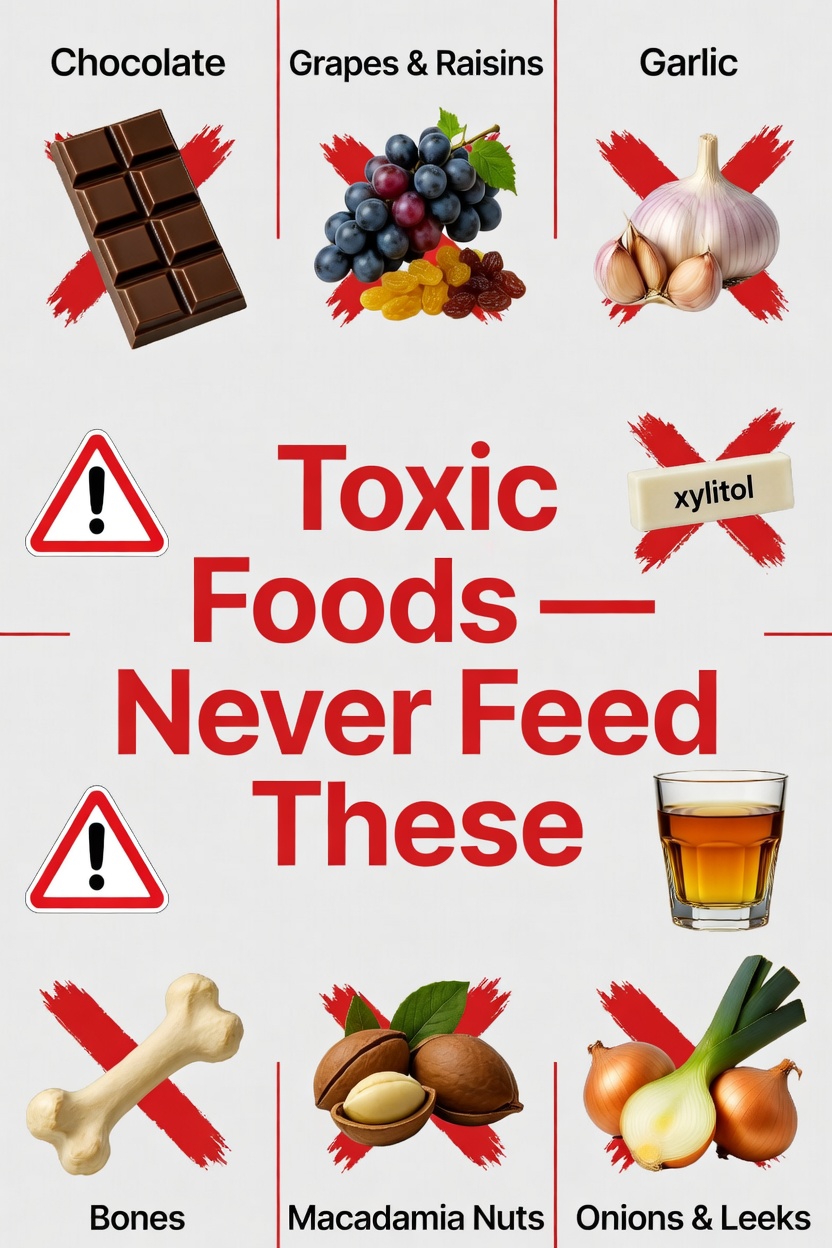
Treats that carry risk
- Grapes and raisins — nephrotoxic, potentially fatal in small quantities
- Onions and garlic — haemolytic anaemia risk
- Xylitol in any form — severe, potentially fatal hypoglycaemia
- Cooked bones — splintering, obstruction, and laceration risk
- High-fat cheese and processed meats — significant caloric density and pancreatitis risk
- Anything from the bin — Beagle owners know this is a real risk, not a hypothetical one
Using treats in training
Beagles are highly trainable when food motivation is harnessed correctly. For a deeper look at using positive reinforcement with Beagles in the context of their scent-driven nature, Feeding Your Beagle provides complementary guidance on food use in the training context. The key principle: use the food motivation, account for the calories.
Supplements for Beagle Longevity
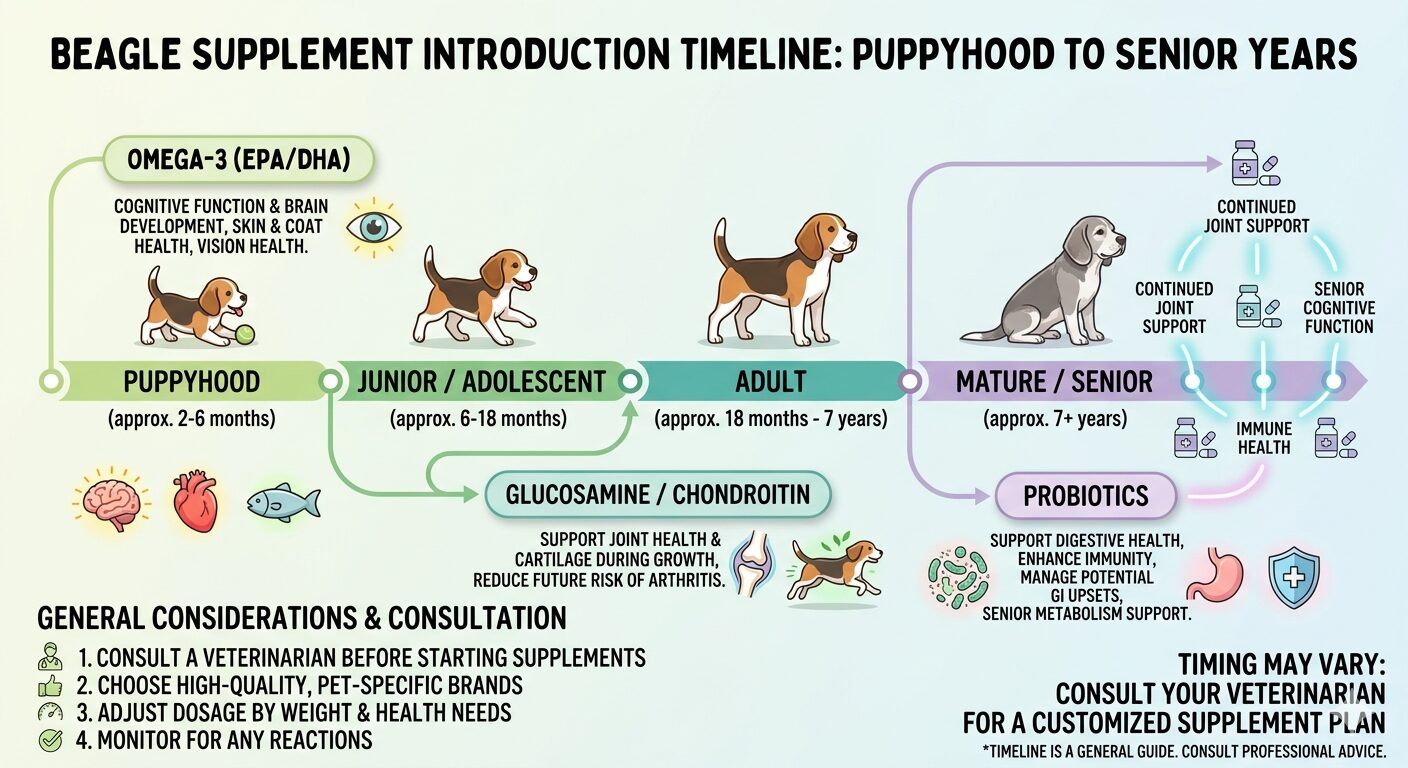
Breed-specific supplementation for Beagles is oriented around the longevity goal — supporting the systems most likely to limit a long, active life: joints, cognition, immune function, and gut health. The following is an evidence-informed framework; introduce supplements one at a time and consult your veterinarian.
Omega-3 fatty acids (EPA and DHA)
The most versatile longevity supplement available for dogs. Marine-sourced omega-3 — from fish oil or krill oil — provides active EPA and DHA that reduce systemic inflammation, support joint cartilage health, maintain cognitive function in ageing dogs, and contribute to healthy skin and coat. Dose: 300–500 mg EPA+DHA per 10 kg body weight per day. More is not better above this range — excess fish oil can cause loose stools and, at very high doses, may impair platelet function.
Glucosamine and chondroitin
Support cartilage matrix integrity and joint fluid quality. Most beneficial when introduced preventively — by age 4–5 in a Beagle with an active lifestyle — rather than as a late therapeutic. Choose products with verified concentrations; independent testing consistently finds many commercial supplements contain a fraction of their labelled active ingredient.
Antioxidants (vitamin E and selenium)
Reduce the accumulated oxidative damage associated with ageing. Most quality adult and senior diets provide adequate selenium and vitamin E; supplementation is warranted only if the base diet is nutritionally marginal. Assess dietary provision before adding these, as selenium toxicity is a real risk at excess doses.
Probiotic support
Gut microbiome diversity is increasingly linked to immune function, inflammatory regulation, and cognitive health in ageing dogs. A daily canine probiotic — containing Lactobacillus acidophilus and Enterococcus faecium at minimum — supports gut health throughout adult life. Introduce gradually to avoid initial digestive adjustment symptoms.
What to skip
Human supplements not formulated for dogs; supplements with proprietary blends and unverified concentrations; calcium supplements without veterinary guidance; any supplement claiming to "reverse" ageing or chronic disease.
For the professional-level clinical context on how supplements are managed across the full breeding and developmental cycle — including the periconceptional and neonatal stages that shape a Beagle's baseline health before it ever reaches your home — Advanced Puppy Nutrition for Breeding Programs on PemberDiamonds provides the foundational science.
For personality-based approaches to Beagle training and enrichment that complement a longevity-focused nutrition program, Enhancing Your Bond Through Personality-Based Training on PemberDiamonds is an excellent companion resource.
Senior Beagle Nutrition
Feeding a Dog Well into Its Teens
A Beagle that has been well-nourished, appropriately exercised, and maintained at healthy weight through its first seven years arrives at its senior phase with significant biological reserves. Senior nutrition is about protecting those reserves — not abandoning the principles that built them.
When is a Beagle senior?
Most Beagles are considered senior from 7–8 years. Many remain physically vibrant and mentally sharp through 10–11 years with appropriate care. The nutritional shifts required at this stage are calibrations, not overhauls.
Key nutritional adjustments for senior Beagles
Reduce caloric density slightly. Metabolic rate decreases with age; a Beagle that maintained ideal weight on 650 kcal/day at age 5 may maintain the same weight on 560 kcal/day at age 9. Adjust portions based on monthly BCS, not on a fixed schedule.
Maintain or increase protein quality. This is the most commonly misunderstood aspect of senior dog nutrition. Older dogs do not need less protein — they need higher-quality protein to maintain lean muscle mass against the natural decline of sarcopenia (age-related muscle loss). Choose a senior formula with minimum 22–24% DM protein from named animal sources, and be sceptical of "light" senior formulas that achieve calorie reduction partly through protein reduction.
Prioritise joint support. Omega-3 supplementation and glucosamine/chondroitin supplementation become more important, not less, in the senior years. Joint discomfort is often the first quality-of-life issue in senior Beagles — proactive nutritional support through supplementation reduces the severity and onset of clinically significant arthritis.
Monitor water intake. Increased drinking can be an early indicator of kidney disease, diabetes mellitus, or Cushing's disease — all of which have higher prevalence in senior dogs. Any sustained increase in water consumption warrants veterinary investigation.
Digestive support. Split the daily ration into 2–3 smaller meals to support a digestive system that processes food less efficiently at older ages. Consider a senior formula with added prebiotics and probiotics if digestive irregularity develops.
Data point
A long-term study tracking Beagle longevity found that body weight throughout life — particularly in the middle years between age 3 and 8 — was the strongest predictor of lifespan among the environmental and nutritional variables examined. Dogs maintained at lean-to-ideal weight in middle age survived significantly longer than those with any period of sustained overweight status.
Proper Hydration and Its Role in Beagle Health
Water is the nutrient most commonly overlooked in canine nutrition discussions — and in a breed like the Beagle, where kidney health is a longevity determinant and digestive efficiency supports a long working gut, hydration deserves dedicated attention.
Daily water requirements
Dogs require approximately 50–70 ml of water per kilogram of body weight per day. A 10 kg Beagle needs 500–700 ml daily from all sources — food moisture included. Dry kibble provides minimal water (approximately 8–10% of its weight); wet food provides substantially more (approximately 75–80%). Beagles fed exclusively on dry kibble must have consistent access to fresh water at all times.
Supporting hydration
- Fresh water, refreshed twice daily. Beagles are sensitive to water quality — stale or contaminated water is often refused by a breed with a highly discriminating nose. Wash the water bowl daily.
- Multiple water stations. In multi-dog households or large homes, multiple water access points increase voluntary intake.
- Wet food addition. Adding a small portion of wet food (50–100 g) to the daily dry ration increases total moisture intake without significantly disrupting nutritional balance, provided caloric content is accounted for.
- Post-exercise access. After walks, play, or scent work, provide water before offering food. Hydrating before eating supports digestive function and reduces the risk of gulping.
Hydration and kidney longevity
Adequate chronic hydration is one of the most evidence-supported interventions for extending kidney health over a dog's lifetime. Chronic mild dehydration — which many dogs on dry-food-only diets experience without obvious clinical signs — places a sustained low-level load on the kidneys that compounds over years. This is particularly relevant for a breed being fed for a 15+ year lifespan.
Signs of inadequate hydration
Skin turgor test (gentle tent of skin at the scruff — if it does not spring back within 2 seconds, the dog may be dehydrated), dry or tacky gums, reduced urine output or dark urine, and reduced energy or alertness following exercise. Any persistent dehydration sign warrants veterinary review.
 EXPERT INSIGHT
 EXPERT INSIGHT
On feeding Beagles for the long game:
"The most underappreciated factor in Beagle longevity is the middle years — specifically the period from about age three to age eight. This is when owners typically relax their feeding discipline because the dog seems healthy and stable, and it's when small but consistent caloric excesses accumulate most invisibly. A Beagle that enters its senior years at BCS 6 or 7 has been carrying excess load on its joints and organs for potentially five or six years. The kidneys and the joints don't show that history loudly until they do — and by then, the opportunity to have prevented it has passed. The owners who consistently bring me their 13- and 14-year-old Beagles in good condition are, almost without exception, owners who weighed their dogs monthly and measured every meal. Not occasionally. Every meal, every month, for the dog's entire adult life. That discipline is the nutritional version of preventive medicine — and it is far more powerful than any supplement or premium food formulation."
— Perspective consistent with clinical and research literature in veterinary geriatric medicine and canine longevity studies.
 1. What should I feed my Beagle puppy?
 1. What should I feed my Beagle puppy?
Choose an AAFCO-compliant puppy formula (not large-breed formula) with a named animal protein as the first ingredient, calcium between 1.0–1.6% DM, and marine-sourced DHA listed in the ingredients. Feed four times daily from 8–12 weeks, reducing to three times at three months. Measure portions by weight and adjust weekly based on body condition, not appetite — Beagle puppies will consistently perform hunger regardless of their actual caloric status.
2. How much should I feed my adult Beagle?
An adult Beagle of 9–11 kg at moderate activity requires approximately 580–680 kcal per day. Weigh portions on a kitchen scale — volume cups are inaccurate across kibble types. Divide the daily ration into two equal meals. Recalculate based on monthly BCS checks; if ribs are becoming difficult to feel under light pressure, reduce by 10% and reassess in four weeks.
3. Why do Beagles always seem hungry?
It is breed biology, not caloric insufficiency. Beagles have strong food drive, exceptional olfactory sensitivity to food cues, and less reliable satiety signalling than many breeds. If your Beagle's BCS is optimal (4–5/9), weight is stable, and energy is normal, the dog is not underfed — it is performing hunger, which is a normal Beagle behaviour. Consistent feeding routines and environmental food management help regulate this behaviour.
4. How do I prevent my Beagle from becoming obese?
Measure every meal by weight. Use the 10% rule for treats. Assess BCS monthly — do not rely on visual impression alone. Secure all food storage and waste. Schedule two daily feeds rather than free-feeding. Exercise regularly, including scent work for mental stimulation. Obesity in Beagles is almost always the result of consistently small caloric surpluses rather than one-time overindulgence — prevention requires consistent daily discipline, not occasional restriction.
5. What are the best treats for Beagles?
Lean cooked protein (chicken, turkey, white fish), carrot sticks, green beans, and blueberries are low-calorie, high-value options. For training, keep individual treat size to pea-sized and choose commercial options under 3 kcal per piece. Account for all treat calories in the daily total. Avoid grapes, raisins, onions, garlic, and anything containing xylitol — all are toxic to dogs.
6. When should I switch my Beagle to senior food?
Most Beagles transition to senior feeding consideration at 7–8 years. However, the switch should be driven by the individual dog's metabolic needs, not a fixed age. If a 7-year-old Beagle is maintaining optimal weight and energy on an adult formula, there is no nutritional urgency to switch. If caloric density management becomes difficult, or if the veterinarian identifies early organ changes that warrant dietary modification, a senior or light formula may be indicated at that point.
7. Do Beagles need supplements?
Not necessarily from puppyhood. From middle age (4–5 years), marine-sourced omega-3 supplementation (300–500 mg EPA+DHA per 10 kg body weight per day) is well-supported for joint and inflammatory health. Glucosamine and chondroitin added at this stage provide preventive joint support for an active breed expected to live into its teens. A canine probiotic supports gut and immune health throughout adult life. Introduce one supplement at a time, monitor for tolerance, and confirm with your veterinarian.
8. How much water does my Beagle need each day?
Approximately 50–70 ml per kilogram of body weight daily from all sources. A 10 kg Beagle needs 500–700 ml per day. Ensure fresh water is available at all times, refreshed twice daily — Beagles' sensitive noses often lead them to refuse stale water. If your Beagle eats only dry kibble, water intake from food is minimal and free access to a clean bowl is especially important.
9. Can Beagles eat a raw diet?
Raw feeding is an option if formulated correctly to meet AAFCO requirements for the appropriate life stage. Beagles' robust digestive systems handle variety reasonably well. The primary risk with raw diets is nutritional incompleteness — particularly deficiencies in calcium, phosphorus, iodine, or zinc — which are common in home-prepared raw diets not designed with veterinary nutritional input. If you pursue raw feeding, work with a veterinary nutritionist to verify completeness and manage caloric density carefully, as raw diets are often significantly more calorie-dense than equivalent dry formulas.
10. What are the most common nutritional mistakes Beagle owners make?
The most common are feeding based on appetite rather than measured portions; not accounting for treat calories in the daily total; continuing puppy formula quantities after the switch to adult food; failing to adjust portions as the dog becomes less active with age; and underestimating how quickly small daily surpluses accumulate into meaningful weight gain. The second most impactful mistake is skipping monthly weight and BCS checks — you cannot manage what you do not measure.
CONCLUSION
Beagle nutrition for longevity rests on three pillars that reinforce each other across every year of the dog's life. Portion discipline — measured, consistent, unswayed by theatrical hunger performances — is the mechanism by which healthy weight is maintained, and healthy weight is the most powerful single intervention for a long, comfortable life. Life-stage feeding — matching macro-nutrient profiles and caloric density to the actual requirements of a growing puppy, a working adult, or an ageing senior — ensures the Beagle's body is supported at every developmental stage with what it actually needs. And progressive supplementation — beginning with omega-3 in the middle years and building toward the full longevity stack in the senior phase — provides the nutritional scaffolding that protects joints, gut, and cognition across a decade and more.
Nutrition category guidance like this exists because the choices made at the bowl — every day, across an entire life — are the most controllable determinants of how many years you get with your Beagle, and what quality of life fills those years.
The merry, curious, scent-drunk 14-year-old Beagle is not luck. It is intention. Start building it today.
 CALL TO ACTION
 CALL TO ACTION
Every aspect of your Beagle's wellbeing connects to every other — nutrition supports training, training supports mental health, mental health supports longevity. For a practical enrichment programme that puts your Beagle's extraordinary nose to work in ways that complement an intentional feeding plan, explore The Nose Knows: Structured Enrichment for Beagles. And for the full picture of Beagle ownership — from choosing a puppy through to senior care — The Complete Guide to the Beagle is your comprehensive companion resource.
Your Vet Knows Your Dog Best
The information in this article is intended for general educational purposes only and does not constitute veterinary advice. Every dog is an individual — age, health status, activity level, and existing medical conditions all affect nutritional needs in ways that a general guide cannot account for. Before making significant changes to your dog's diet, introducing supplements, or implementing a weight management program, speak with your veterinarian. This is particularly important if your dog has any existing health conditions, is a puppy under six months, is pregnant or nursing, or is a senior dog with known organ changes. Your vet is your most reliable partner in building a feeding plan that works for your specific dog — not just the breed in general.