
Progesterone Testing In Dogs
 ⚡ QUICK ANSWER
What does a canine progesterone test actually measure, and why is it the gold standard for ovulation tracking?
A canine serum progesterone test measures the exact concentration of progesterone hormone (in ng/mL or nmol/L) circulating in the bloodstream at a given moment. Because progesterone rises in a precise, predictable pattern that directly mirrors the LH surge and ovulation event, tracking its serial values allows veterinarians and owners to identify the exact day of ovulation — not an estimate, not a range, but a specific endocrine milestone. No visual sign, behavioural observation, or calendar-based method can replicate this level of biological precision.
Why Progesterone Is the Keystone of Cycle Management
Of all the tools available for canine reproductive management, quantitative serum progesterone testing occupies a unique position. It is the only method that directly quantifies the hormonal event that defines the fertile window — not its symptoms, not its downstream effects, but the actual biochemical trigger itself.
For decades, canine reproduction was managed through a combination of intuition, folklore, and broad behavioural generalisation. Breeders counted calendar days, watched for discharge colour changes, and relied on the female's willingness to stand for mating as the primary fertility signal. Modern veterinary reproductive medicine has comprehensively demonstrated that all of these methods are unreliable indicators of the true fertile window.
This article explains exactly what progesterone testing measures, how to interpret every value on the progesterone curve, how to apply this data in a clinical context, and how to avoid the most common errors made by owners who are new to data-driven cycle management.
ℹ The Global Adoption of Progesterone Testing
As of 2024, in-house chemiluminescent progesterone analysers (Tosoh AIA, Immulite 2000, VIDAS, Roche Cobas series) are present in the majority of specialist veterinary reproduction clinics across North America, Europe, Australia, and Japan. Point-of-care semi-quantitative test kits (Witness LH, Target Canine Progesterone) now bring basic cycle tracking into general practice worldwide. The science has become globally accessible.
The Biology Behind Progesterone
Progesterone is a steroid hormone produced primarily by the corpus luteum — the structure that forms in the ovary after a follicle ruptures and releases its egg. In the canine cycle, progesterone begins to rise even before ovulation due to the unique process of pre-ovulatory luteinisation, where follicular cells begin producing progesterone as they prepare to release their eggs.
This pre-ovulatory rise is what makes canine progesterone uniquely useful as an ovulation marker. Unlike many other species, progesterone in the bitch begins rising measurably before ovulation and continues on an exponential curve afterward. By tracking this rise serially, the LH surge — the primary trigger for ovulation — can be identified retrospectively with precision.
The Progesterone-LH Relationship
The LH surge (Luteinizing Hormone surge) is the true biological event that initiates ovulation. LH surges are brief — they typically last only 24–48 hours — and direct testing requires very frequent blood sampling to capture them reliably. Progesterone, by contrast, rises more gradually and can be detected accurately with 48-hour testing intervals.
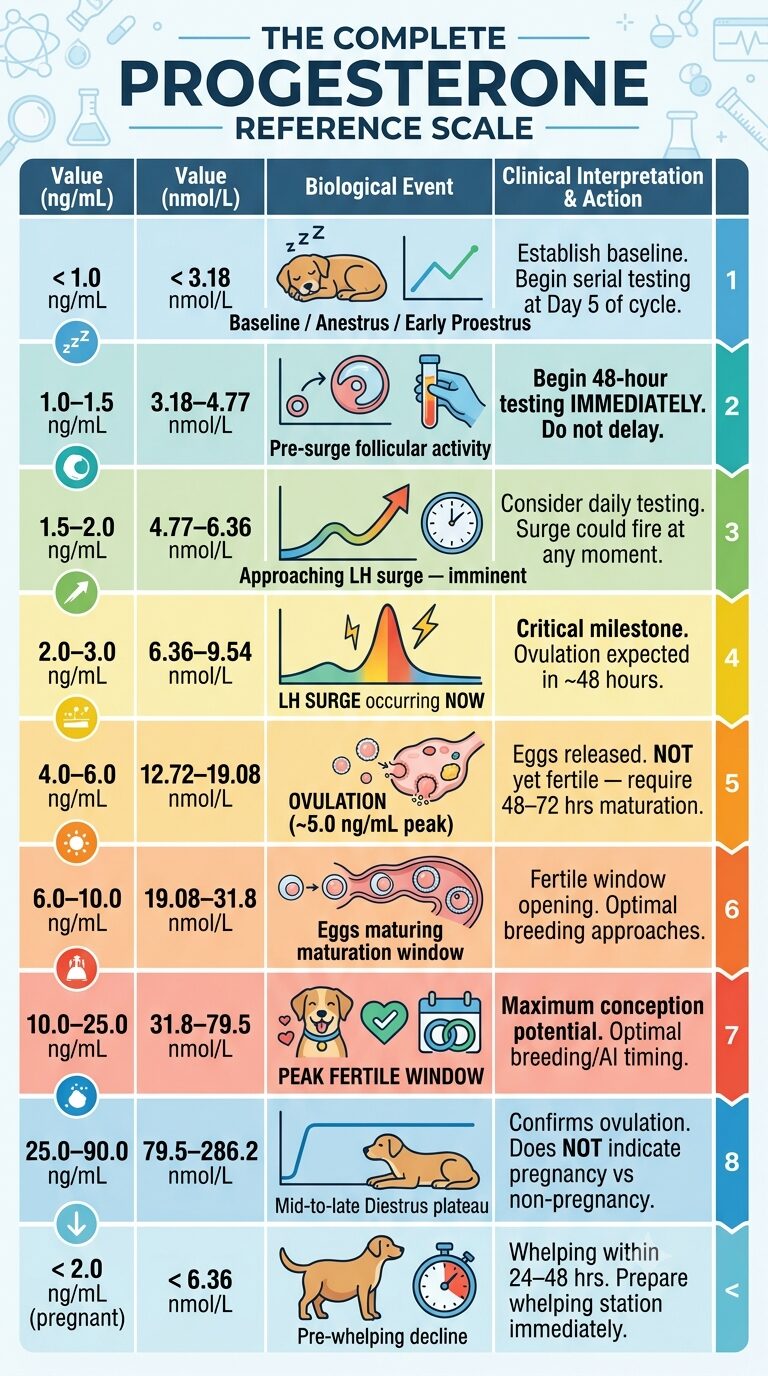
• LH surge occurs: Progesterone crosses 2.0–3.0 ng/mL
• Ovulation occurs: Approximately 48 hours after LH surge; progesterone reaches 5.0 ng/mL
• Oocyte maturation complete: 48–72 hours post-ovulation; progesterone at 10.0–25.0 ng/mL
• Peak fertile window: Progesterone 10.0–25.0 ng/mL — highest conception rates
 “The dog is unusual among domestic animals in that she ovulates primary oocytes — eggs in an immature state that require further development inside the oviducts before they can be fertilised. This means the optimum time for fertilisation is not at ovulation but 2–3 days later. Progesterone tracking is the only reliable method we have to account for this maturation window in a clinical setting.”
— Dr. Patrick Concannon PhD — Cornell University Baker Institute, Canine Reproductive Physiology Research, USA
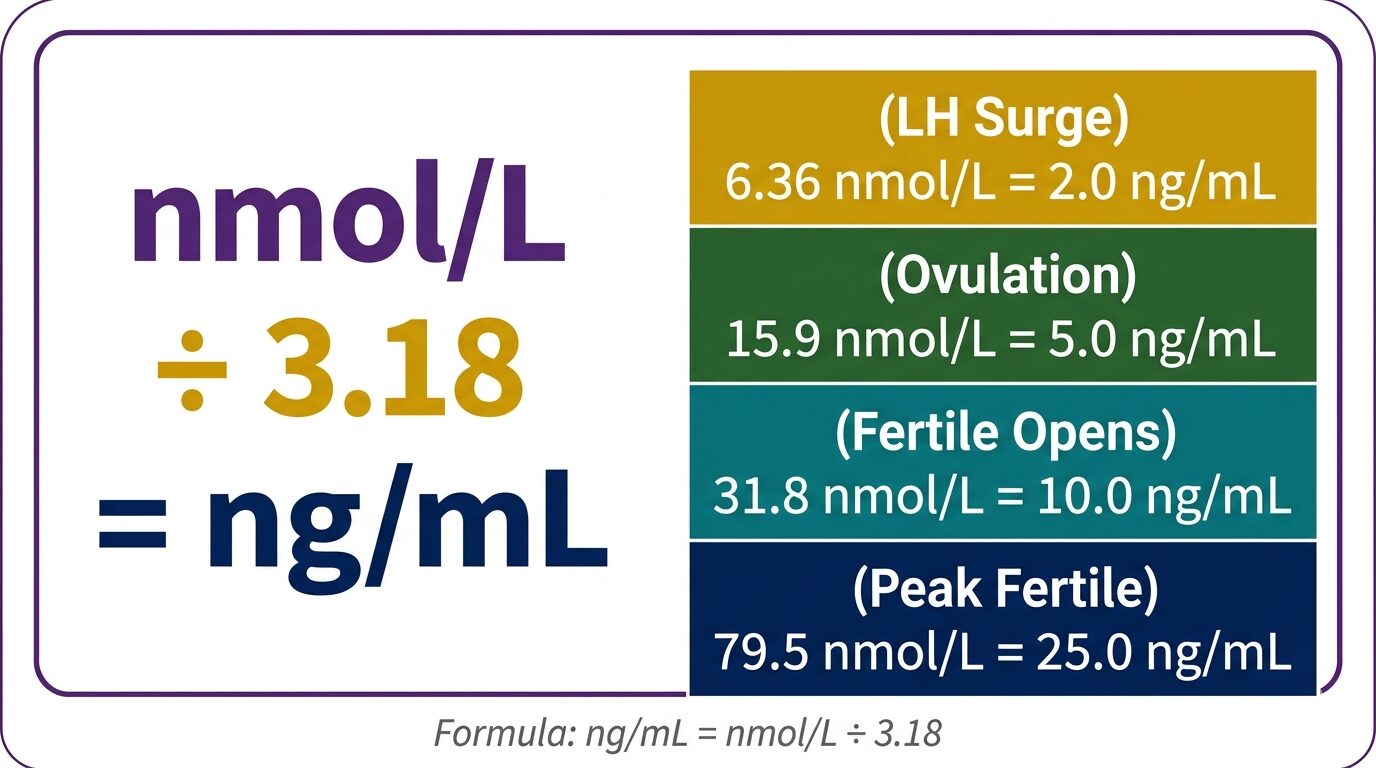
The Complete Progesterone Reference Scale
Understanding the Exponential Curve
The most clinically important concept in canine progesterone tracking — and the most frequently misunderstood — is the nature of the progesterone rise. It does not ascend linearly. It follows an exponential curve.
What an Exponential Curve Means in Practice
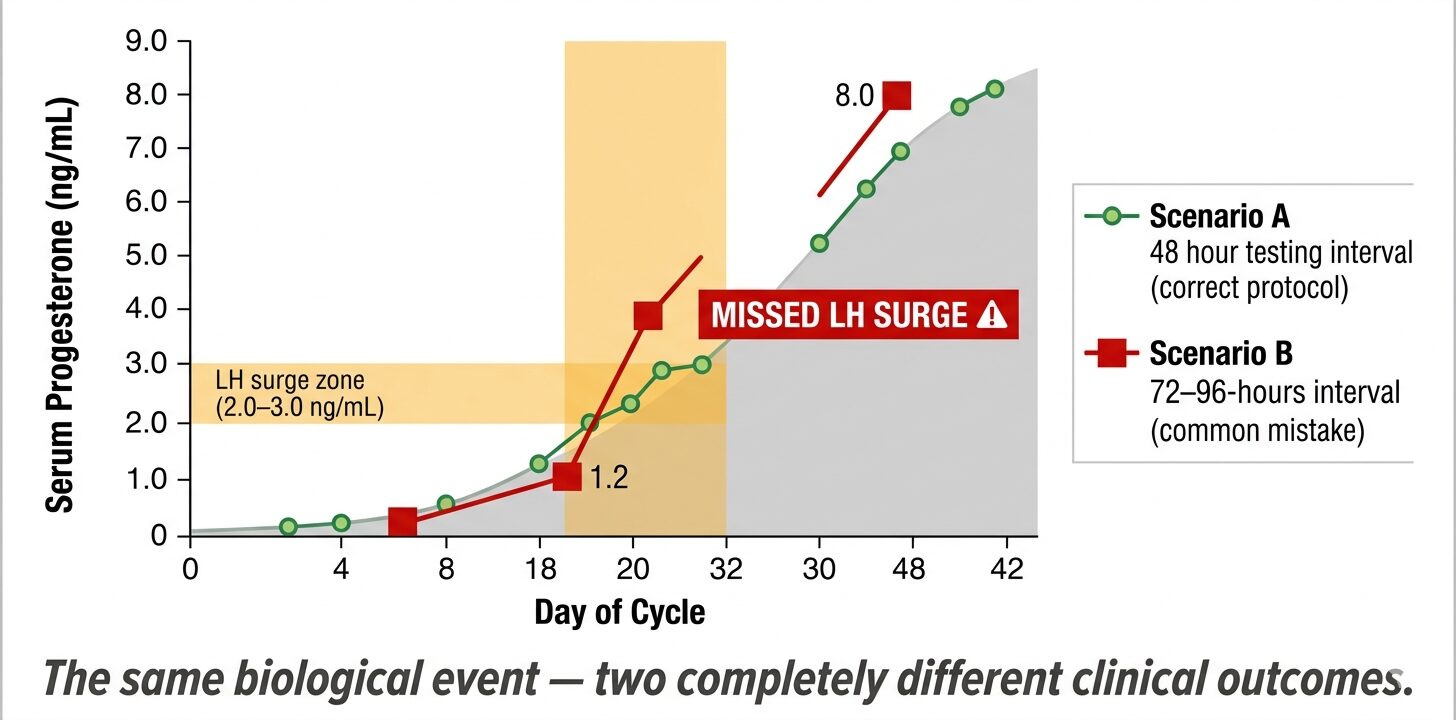
During early proestrus, progesterone may read 0.8 ng/mL on Day 5, 0.9 ng/mL on Day 7, and 1.1 ng/mL on Day 9 — giving the impression that nothing significant is happening. Then between Day 9 and Day 11, it can jump from 1.2 ng/mL to 5.8 ng/mL in less than 48 hours.
Owners who wait for a perceptible linear rise before beginning serial testing frequently miss this window entirely. The protocol is clear: once the value exceeds 1.5 ng/mL, a 48-hour interval between tests is the maximum acceptable gap.
⚠ The Most Expensive Testing Mistake
Testing progesterone every 3–4 days rather than every 48 hours after the value passes 1.5 ng/mL is the single most common cause of missed fertile windows in non-specialist settings. The exponential rise can encompass the entire LH surge-to-ovulation window within a single missed 72-hour gap.
“I have reviewed cases where owners were testing every 3–4 days and genuinely believed they had captured their female's LH surge because they saw a number jump from 1.0 to 8.0 ng/mL between two tests. In reality, they had entirely missed the LH surge (at 2.0–3.0 ng/mL) and were looking at a post-ovulation value. Knowing your starting value was 8.0 ng/mL tells you almost nothing about optimal breeding timing. The number you need is 2.0–3.0 ng/mL.”
— Dr. Catharina Linde-Forsberg DVM, PhD — Swedish University of Agricultural Sciences, Uppsala, Sweden
Testing Methods
A Global Comparison
Method 1
Chemiluminescent Immunoassay (CLIA) — In-Clinic Analyser
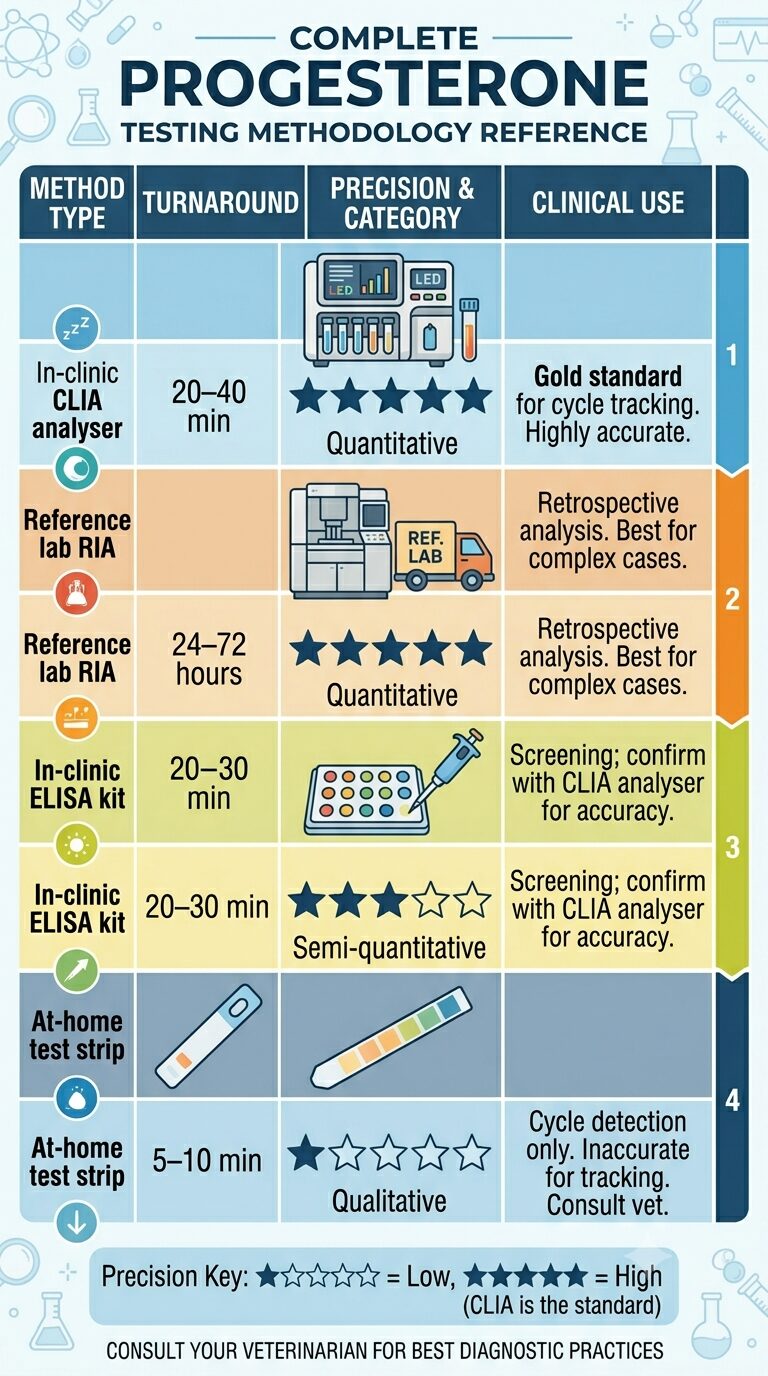
This is the gold standard. Dedicated in-house veterinary analysers (Tosoh AIA, Siemens Immulite, BioMerieux VIDAS) use chemiluminescent or fluorescent enzyme immunoassay technology to produce quantitative results in 20–40 minutes. Results are reported in ng/mL or nmol/L with high analytical sensitivity.
• Advantages: True quantitative results; same-day turnaround; highest precision for progesterone curve tracking.
• Disadvantages: Requires veterinary clinic visit; most expensive per-test option.
• Best for: All serious cycle tracking; any situation where accurate ovulation timing matters.
Method 2
Radioimmunoassay (RIA) — External Reference Laboratory
Serum samples shipped to a reference laboratory and analysed by radioimmunoassay. Gold-standard analytical accuracy but a 24–72-hour turnaround time.
• Advantages: Highest available analytical sensitivity; useful for retrospective cycle analysis.
• Disadvantages: Turnaround delay makes real-time cycle management impractical.
Method 3
ELISA Semi-Quantitative Kits (Witness LH, Target Canine)
Rapid in-clinic ELISA tests that provide semi-quantitative progesterone results within 20–30 minutes. Broadly available in general practice globally.
• Advantages: Accessible in general practices without expensive analysers; fast turnaround.
• Disadvantages: Semi-quantitative rather than fully quantitative. Less precision at critical decision points (2.0–5.0 ng/mL transition zone).
• Best for: Initial cycle screening, confirming approximate phase. Always follow up with quantitative analysis for breeding decisions.
Method 4
At-Home Test Strips
Consumer-grade urinary or vaginal secretion test strips claiming to detect LH or progesterone changes are now marketed globally. These should be used only as early-warning indicators of cycle initiation — never for ovulation timing.
• Not validated for progesterone quantification in canine samples
• Cannot replace veterinary-grade serum testing for any breeding or clinical decision
6. Applying Progesterone Data
Whelping Date Calculation
One of the most powerful practical applications of accurate progesterone tracking is the ability to calculate a precise whelping date, independent of when actual breeding occurred.
The Two Formulas
Whelping = LH surge date + 65 days (+ or - 1 day)
Whelping = Ovulation date (5.0 ng/mL date) + 63 days
NOTE: Why Breeding Dates Are Irrelevant to Whelping Date
Canine sperm can survive in the female reproductive tract for 5-7 days. A female bred on Day 10 and Day 14 of her cycle will whelp on the exact same day as a female bred on Day 12 only, provided they both ovulated on the same date. The whelping date is set by ovulation, not by breeding. Only progesterone tracking can establish this date with certainty.
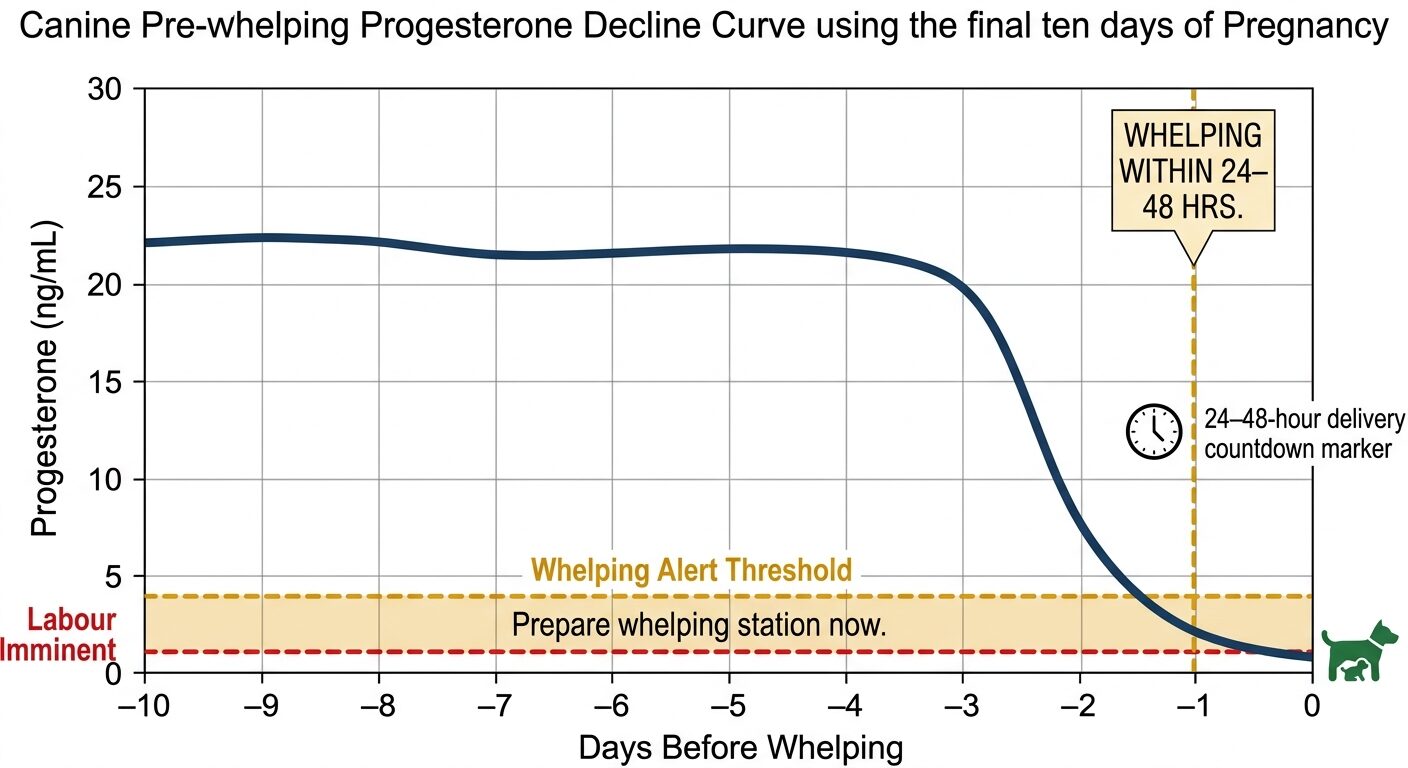
Pre-Whelping Progesterone Drop
In pregnant females approaching term, serial progesterone monitoring in the final week before whelping provides the most precise indication of imminent labour. When progesterone falls below 2.0 ng/mL (and continues toward less than 1.0 ng/mL), active labour will begin within 24-48 hours. This decline triggers the removal of the progesterone block on uterine smooth muscle, allowing contractions to initiate.
WARNING: C-Section Planning
For breeds with high C-section rates (French Bulldogs, English Bulldogs, Boston Terriers, Scottish Terriers), pre-whelping progesterone monitoring is critical for scheduling elective procedures at precisely the right biological moment - after the progesterone drop has confirmed labour readiness but before active contractions put pups at risk. Always coordinate with your veterinary surgical team at least 1 week prior to the expected whelping date.
7. Progesterone and Pyometra: The Diestrus Connection
It is impossible to discuss progesterone in intact females without addressing pyometra. The condition is directly and mechanistically linked to the prolonged high-progesterone environment of every diestrus phase in every intact female's life.
The Progesterone-Pyometra Mechanism
High progesterone (15-90 ng/mL during diestrus) causes the uterine lining to thicken and secrete fluids.
Concurrently, progesterone suppresses local uterine immunity - an evolutionary adaptation to protect sperm.
Over repeated un-mated diestrus phases, the lining becomes progressively hyperplastic (CEH).
The resulting fluid-filled cystic environment is a perfect growth medium for ascending bacteria (E. coli most common).
Pyometra risk increases with every un-mated cycle - with some studies noting highest incidence risk between cycles 3 and 6.
Serial progesterone tracking directly contributes to pyometra awareness: owners who track the cycle know exactly when diestrus begins, exactly how long it lasts, and exactly when to begin watching for the clinical warning signs of uterine infection.
WARNING: "Pyometra is not a disease of bad luck - it is a disease of biology and timing. Every intact female that completes a diestrus phase has been exposed to the hormonal environment that enables it. My strongest recommendation to all tracking owners: mark your calendar at the end of every heat cycle with a 4-week and 8-week alert. These are your highest-risk windows. Know the signs. Do not dismiss them." - Dr. Alain Fontbonne DVM, PhD, DECAR - Alfort National Veterinary School, Paris, France
8. Common Progesterone Testing Mistakes and How to Avoid Them
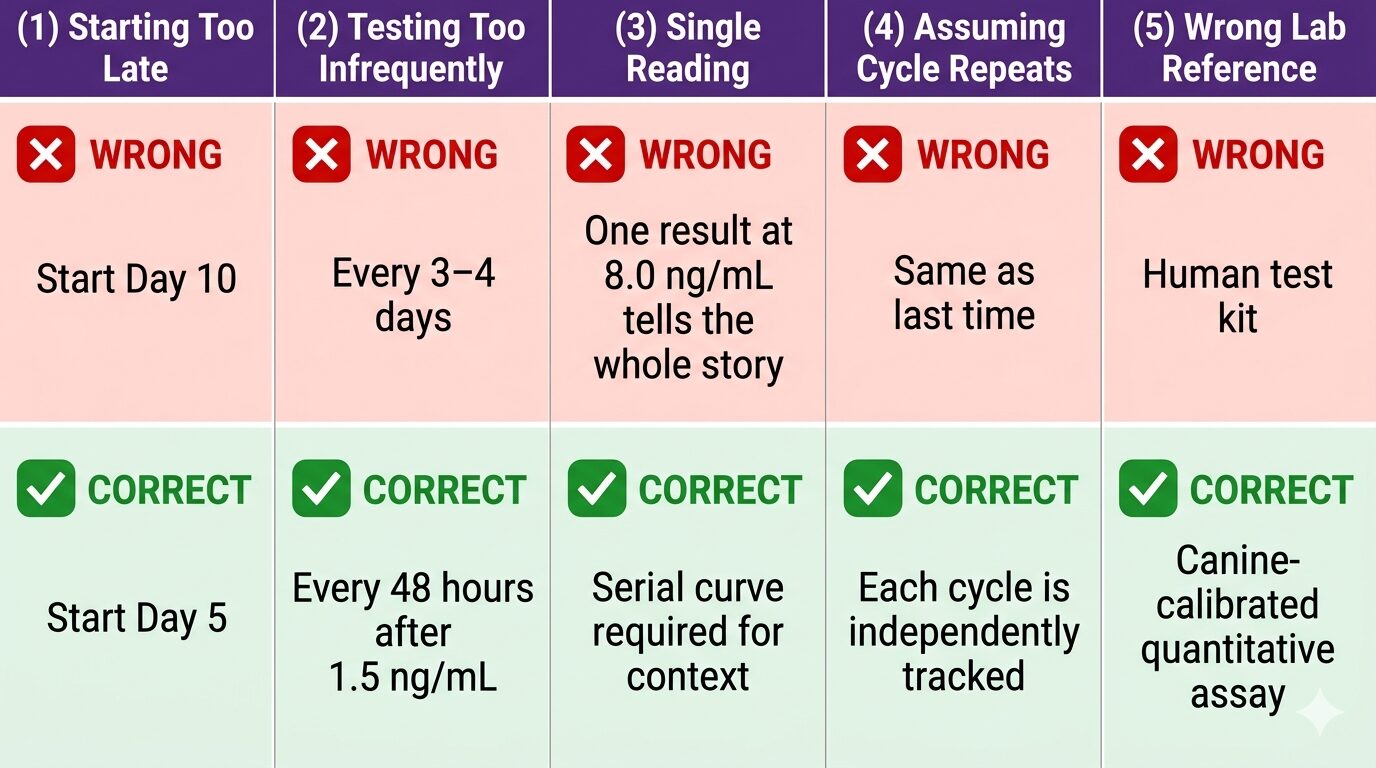
Mistake 1
Starting Testing Too Late
Many owners wait until they see heavy swelling or conspicuous bleeding to begin testing - typically Day 7-10 of the cycle. By this point, early proestrus values have been missed, making it impossible to establish a reliable baseline or identify an early LH surge in females with short cycles. Begin testing by Day 5 of the cycle, regardless of how dramatic the external signs appear.
Mistake 2
Insufficient Testing Frequency
Testing every 3-4 days after the value passes 1.5 ng/mL is clinically inadequate. The LH surge can fire and complete within a 48-hour window. The only safe interval once the value crosses 1.5 ng/mL is 48 hours. In high-stakes situations with valuable breeding pairs, daily testing from 1.5 ng/mL is warranted.
Mistake 3
Interpreting a Single Reading in Isolation
A single progesterone reading has almost no independent clinical value. Its meaning is entirely contextual - it must be read against the previous value, the trend of the curve, and the concurrent cytology findings. Owners who test once, receive a value of 8.0 ng/mL, and conclude she just ovulated have made a dangerous assumption. She may have ovulated 3 days ago. The curve, not the number, tells the story.
Mistake 4
Assuming the Same Cycle Repeats Each Heat
Individual females may show significant variation between cycles - a different LH surge day, a different ovulation timing, a faster or slower progesterone rise. Every cycle requires its own independent serial tracking protocol. Never rely on a previous cycle's data to predict the current cycle's timeline.
Mistake 5
Using the Wrong Laboratory Reference Ranges
Different analyser platforms have different internal calibration standards. The 5.0 ng/mL ovulation benchmark is an absolute reference value valid across all quantitative platforms. However, some semi-quantitative kits are calibrated to flag progesterone at different threshold values. Always confirm which unit and threshold system your laboratory uses.
 Expert Opinions
 Expert Opinions
Global Perspectives on Progesterone Testing
"In Australian breeding communities, we have seen a complete transformation in how serious preservation breeders approach cycle management over the past 15 years. Serial progesterone testing is now considered the absolute minimum standard in working dog, show dog, and companion breed programmes alike. The data is unambiguous: conception rates from optimally-timed matings are consistently superior to those from calendar-based approaches."
- Dr. Mark Westman BVSc, MVS, FANZCVS - Veterinary Reproduction Specialist, Sydney, Australia
"From a biochemical perspective, the canine progesterone curve is one of the cleanest hormonal signals in mammalian reproductive endocrinology. Its pre-ovulatory rise, combined with the unique biology of oocyte maturation, creates a predictable, measurable timeline that we can exploit clinically. There is no legitimate scientific argument for not using it when it is available."
- Prof. Aykut Gram DVM, PhD - Ankara University Faculty of Veterinary Medicine, Turkey
"We now routinely combine real-time PCR-based vaginal microbiome analysis with progesterone tracking in our advanced reproductive cases. What we have found is that the progesterone curve does not just mark ovulation - it orchestrates a complete transformation of the vaginal and uterine microbial ecosystem. The clinical implications of this are only beginning to be understood."
- Dr. Nicola Pugliese DVM, PhD - University of Bari Aldo Moro, Department of Veterinary Medicine, Italy
 Frequently Asked Questions (FAQ)
 Frequently Asked Questions (FAQ)
Q: What is the exact progesterone value that indicates ovulation has occurred?
A: The internationally accepted benchmark for ovulation in the domestic dog is a serum progesterone reading of approximately 5.0 ng/mL (15.9 nmol/L). This value reflects the moment the ovarian follicles have ruptured and released their eggs. However, because dogs ovulate primary oocytes that require a further 48-72 hours to mature, the true fertile window does not open at 5.0 ng/mL - it opens when progesterone reaches 10.0-25.0 ng/mL.
Q: How do I interpret a result where progesterone went from 1.2 to 8.5 ng/mL between tests?
A: This is a classic exponential jump pattern. It most likely means the LH surge (the 2.0-3.0 ng/mL milestone) occurred sometime in the 48-hour window between your tests and you may have missed the precise surge day. It does not mean you have missed the fertile window - at 8.5 ng/mL, ovulation has very recently occurred and oocyte maturation is underway. Your next test in 48 hours should confirm you are entering the peak fertile window.
Q: Can I use human progesterone test kits on my dog?
A: No. Human progesterone reference ranges and test calibrations are entirely different from canine values. Many human tests are designed to detect much lower progesterone thresholds relevant to the human luteal phase. Using human test kits on canine samples will produce meaningless results.
Q: My veterinarian said my dog's progesterone looks good but did not give me a number. Is that enough?
A: No. For cycle management purposes, you need the actual numerical value in ng/mL or nmol/L. A qualitative or semiquantitative assessment such as good, elevated, or in range does not allow you to track the curve, identify the LH surge date, calculate the fertile window, or determine whelping date. Always request the exact numerical result with the unit of measurement.
Q: Is there any condition that can cause a progesterone reading of 5.0 ng/mL outside of ovulation?
A: Yes, though uncommon. An ovarian cyst that has begun to luteinise (a luteinised unruptured follicle) can produce rising progesterone values without true egg release. If your cytology simultaneously shows 100% cornified cells that persist for an unusually prolonged period (more than 21 days) alongside a rising progesterone curve, consult a board-certified veterinary reproduction specialist.
Q: Does a high diestrus progesterone reading confirm pregnancy?
A: No. This is one of the most important facts in canine reproductive biology. Both pregnant and completely un-mated females maintain identical high progesterone levels (15-90 ng/mL) throughout the 60-90-day diestrus phase. Progesterone confirms that ovulation occurred and that the body is maintaining a normal luteal phase. Pregnancy can only be confirmed by abdominal ultrasound (earliest reliable: 28 days post-ovulation) or relaxin blood test.
Q: How many progesterone tests does a complete tracking protocol typically require?
A: A complete protocol for a single heat cycle typically requires 5-9 tests: one baseline at Day 5, then every 48 hours from that point until the LH surge is identified, continuing through ovulation confirmation, and one final test to confirm the peak fertile window. For breeding programmes, a pre-whelping series of 2-3 tests in the final week of pregnancy may also be performed.
 Continue exploring this topic in more detail through these related articles
 Continue exploring this topic in more detail through these related articles
- Pillar Article 1: Canine Heat Cycle & Ovulation Tracking— A comprehensive guide to understanding and tracking your dog's heat cycle and ovulation stages.
- Cluster Article 2: Your Female Dog's First Heat Cycle — What to expect and how to respond when your female dog experiences her first heat cycle.
- Cluster Article 3: Mastering the First Heat Cycle in Female Pembroke Welsh Corgis — Everything you need to know about recognising and managing your Corgi's first heat cycle.
Disclaimer
This article is for informational and educational purposes only and does not constitute professional veterinary advice. Progesterone testing, heat cycle monitoring, and breeding decisions should always be made in consultation with a qualified veterinarian. The authors and website accept no liability for any actions taken based on the information in this article.
© 2026 — Canine Reproductive Medicine Reference Series
Pingback:Female Dog's First Heat Cycle - TANYDD - Corgi Crew