
A Guide for Prospective Owners
If you're considering bringing a Beagle puppy into your home, congratulations—you're exploring one of the most beloved and iconic dog breeds in the world. Beagles, with their soulful eyes, floppy ears, and endlessly cheerful demeanor, have been popular family pets for generations. Originally bred as scent hounds for hunting small game in packs, they've evolved into affectionate companions known for their merry temperament and insatiable curiosity. However, like any breed, Beagles come with unique traits that can make them a perfect fit for some households and a challenge for others. To help you evaluate whether a Beagle is the right pet for you, this guide introduces an adapted grading system inspired by Dr. A. Roark's scale, originally referenced in resources for selecting Welsh Pembroke Corgi puppies. We'll break down the system's purpose, how it works, and apply it to Beagles through a definitive list of 18 key traits. Finally, we'll discuss overall suitability, pros, cons, and tips for prospective owners in city or similar urban environments.
The Origins and Purpose of the Grading System
The grading system draws from a 1-to-5 scale attributed to Dr. A. Roark (a veterinarian known for his work in animal behavior and welfare), as adapted in puppy selection guides like the one for Corgis. In its original form, it's designed as a simple, non-absolute tool to assess puppy desirability across core categories: Health, Temperament, Trainability, Conformation (physical structure), and Genetic Predispositions. Scores range from 1 (less favorable, indicating potential challenges) to 5 (favorable, highlighting strengths). The scale emphasizes that a puppy's traits are shaped by both genetics ("nature")—inherited from parents and breed lineage—and environment ("nurture")—including early socialization, training, and home life. It's not a rigid checklist but a guideline to help buyers observe puppies in real settings, ideally at 7-12 weeks old, and make informed decisions.
The purpose is straightforward - to empower prospective owners to evaluate individual puppies or the breed as a whole for compatibility with their lifestyle. For example, a high score in Temperament might indicate a confident, sociable pup, while a lower Trainability score flags the need for patient, reward-based methods. By averaging scores across categories, you can gauge overall promise—e.g., 4.5+ suggests an excellent prospect, while below 2.5 advises caution. Always pair this with visits to reputable breeders, look for those affiliated with KUSA.
Adapting the System for Beagles
We've tailored Dr. A. Roark's framework to Beagles by expanding it into 18 specific traits, drawing from breed standards and expert analyses. These traits align with common evaluation criteria from sources like the American Kennel Club (AKC), which qualitatively rates breeds on similar attributes. Scores here reflect the breed average (not individual dogs), based on how well the trait aligns with desirable pet qualities: 5/5 means the breed excels consistently (e.g., high sociability is a plus), while lower scores highlight challenges (e.g., high vocalization might be a drawback). Variations occur due to breeding lines, so use this as a starting point when assessing a litter—observe puppies interacting with people, other animals, and scents; note energy, responsiveness, and any red flags like fearfulness.
This adaptation incorporates Beagle-specific priorities, such as their legendary scent drive (a core hunting instinct) and pack-oriented sociability, while acknowledging common hurdles like stubbornness or health risks. Data comes from veterinary and breed resources, ensuring a balanced view.
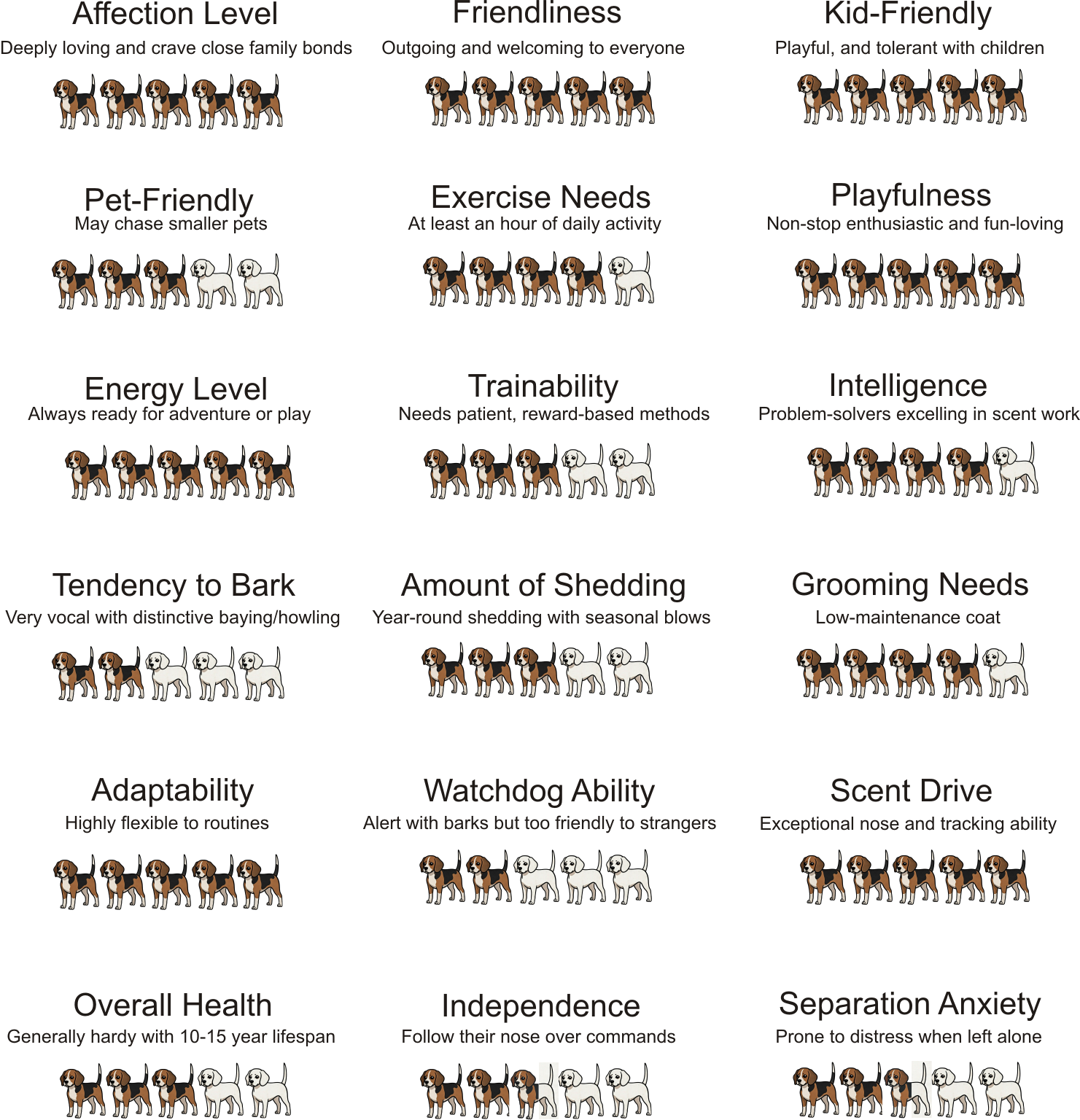
Evaluating the Beagle as a Pet
Pros, Cons, and Considerations
 Beagles make wonderful pets for the right owners, ranking 14th on KUSA's top 20 registered breeds table for 2024. Pros include their sociable, playful nature (great for families, kids, and multi-pet homes), low grooming needs, adaptability, and endless entertainment value—they're "sweet, cute, and affectionate" companions who love outdoor adventures. They're also low-cost to maintain and thrive on simple joys like scent trails or games.
Cons center on their high energy and vocal tendencies (barking/baying can disturb neighbors in urban settings), stubbornness in training, escape-artist habits (they dig and follow scents off-leash), and potential separation anxiety if left alone too long—leading to destructiveness. Health issues like obesity (they're food-motivated) or epilepsy require vigilant care.
Beagles adapt well to city life with leashed walks and dog parks, but their vocalization might not suit quiet apartments—opt for training classes early. They're best for active, patient owners who can provide mental stimulation (e.g., puzzle toys) and aren't away all day; pairs or doggy daycare help with loneliness. Budget for vet checks, as urban pollution can exacerbate ear issues.
In summary, use this grading system to observe puppies and reflect on your lifestyle. If high affection and playfulness appeal, but you can handle the energy and noise, a Beagle could be your ideal match. Visit shelters or breeders, and consult resources like the AKC for more. Happy hunting for your new furry friend!