
What Is Your Beagle Actually Saying? Introducing the Beagle Body Language Decoder
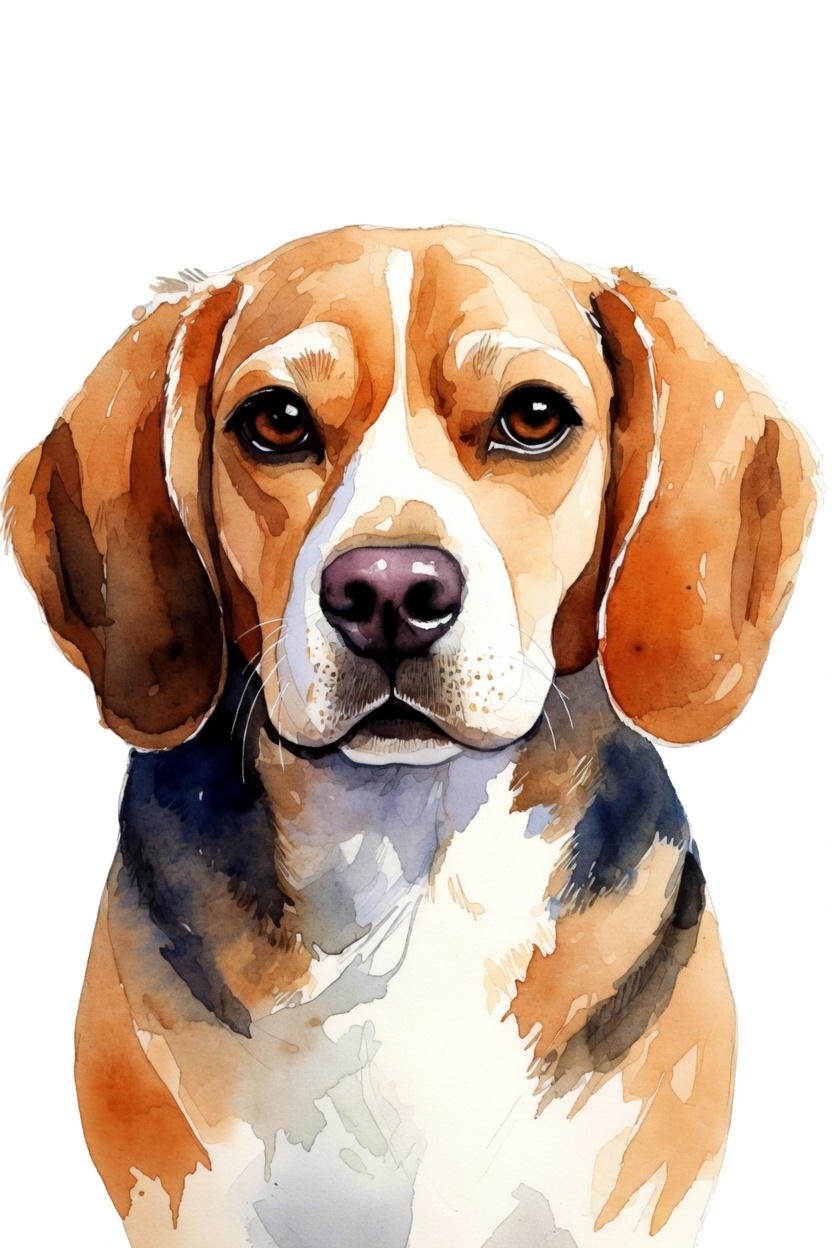 A free interactive tool that helps you read the bay, the lean, the nose-to-ground focus, and every other signal your Beagle sends — in plain English.
Your Beagle is talking to you constantly
The nose pressed to the pavement on your morning walk. The tail flagging upright through long grass. The long, melodic bay that carries across three gardens. The lean against your legs when you sit down. The ears pulled flat when something feels wrong.
Every one of these is a sentence in a language that Beagles have been speaking for over five hundred years — and that most of us were never properly taught to read.
The Beagle Body Language Decoder is our attempt to change that.
Beagles Are Built to Communicate — Just Not Always in Ways We Recognise
The Beagle is one of the oldest and most purpose-built dog breeds in existence. Developed over centuries as pack scent hounds, Beagles were selectively bred not only for their extraordinary olfactory ability — approximately 225 million scent receptors, compared to around 5 million in a human — but for their capacity to work cooperatively, communicate clearly with both pack members and human hunters, and sustain enormous physical and mental effort over long distances.
What that means for you, today, living with your Beagle, is that you are sharing your home with a dog of remarkable communicative intelligence — a dog whose signals are often subtle, frequently misunderstood, and consistently fascinating once you learn to read them.
A Beagle's body, ears, tail, eyes, and voice are in constant dialogue. The bay at the back fence, the flagging tail through grass, the nose that suddenly hits the ground — these are not random behaviours. They are the sentences of a language with a 500-year vocabulary.
The Beagle Body Language Decoder was built to give you a practical, accessible, personalised reference for that language — available on any device, at any moment, completely free.
 What Makes Beagle Communication Different
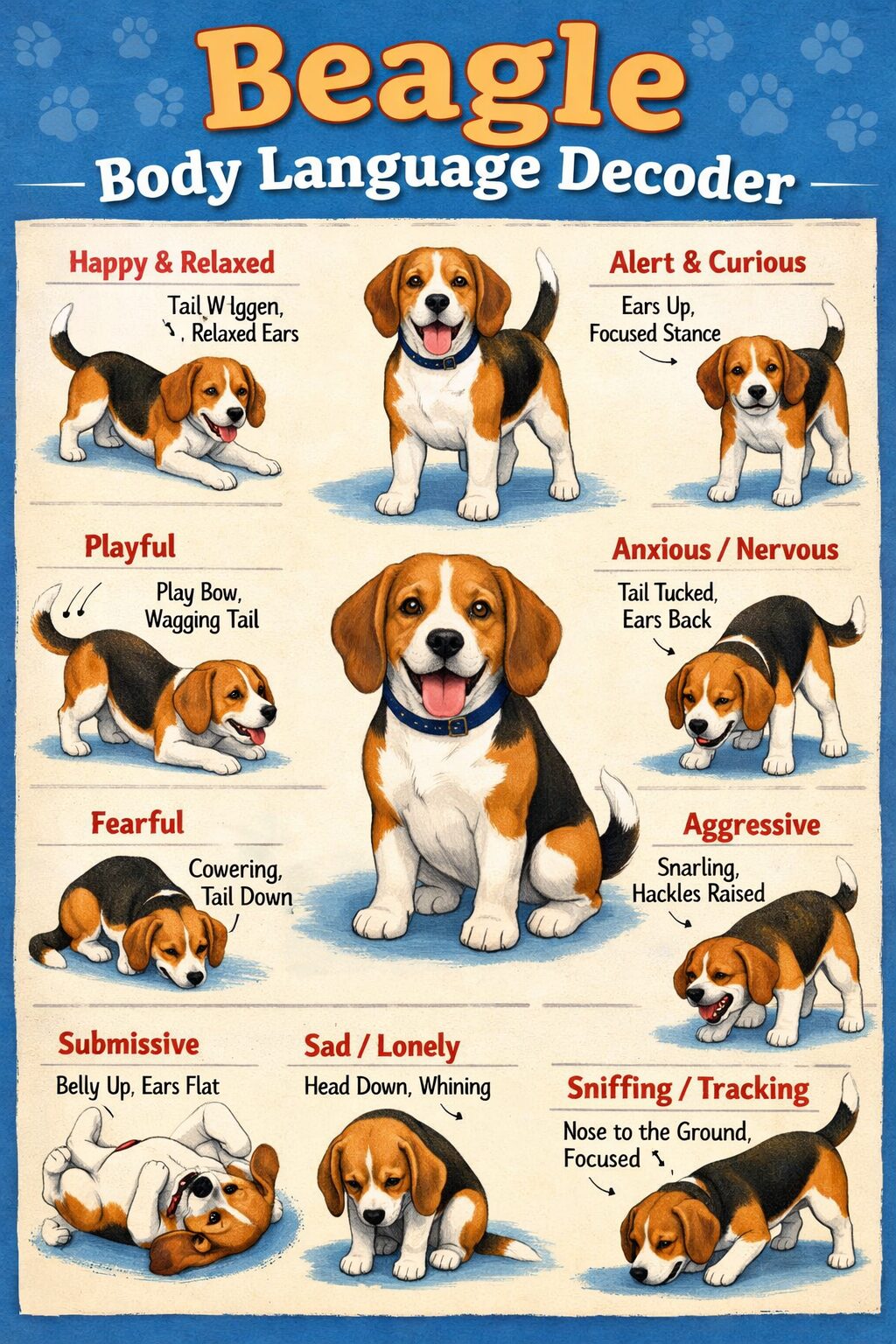 What Makes Beagle Communication Different
Before we explain how the tool works, it is worth pausing on what makes reading a Beagle different from reading other breeds — because several of the most important signals are genuinely unique to this dog.
The ears
Beagle ears hang long and low by default — which means any forward movement is significant. When your Beagle's ears pull slightly forward and the head lifts, that is active alertness. When the ears press even flatter and further back than their natural hang, that is distress. The range of communication is subtler than an erect-eared dog, but no less clear once you know what to look for.
The long, velvety ears also serve a hunting function: when a Beagle puts the nose to the ground, the ears sweep forward and funnel scent molecules upward toward the nose. Your Beagle's ears are not decorative — they are functional tools in active use every single time there is an interesting smell nearby.
The tail — and the white tip
The Beagle's tail flagging high with the white tip clearly visible is known as flagging — and it is one of the most breed-specific signals in all of dog communication. In the field, the white tail tip allowed hunters to see their dog moving through tall grass and undergrowth from a distance. When your Beagle flags the tail today, the same ancient programme is running: this is a dog in full scent-drive mode, excited, focused, and following something irresistible.
Understanding the difference between flagging, a mid-height relaxed wag, a tucked tail, and a stiff rigid tail tells you almost everything you need to know about your Beagle's emotional state in any given moment.
The three vocal expressions
This is where Beagle communication becomes genuinely fascinating — and where most confusion arises. Beagles have three distinct vocal expressions, each with its own emotional register and purpose:
- The bay — the long, melodic howl that was the breed's defining characteristic for 500 years. This is a scent-drive signal. When your Beagle bays, they have found a trail and are in full hunting drive. The word "Beagle" itself is thought to derive from the French bé'geule, meaning open throat. This is the sound the breed was named after.
- The bark — a sharp, repetitive alert or frustration signal. Distinct from the bay in pitch and pattern. This is your Beagle communicating that something is happening and they want your attention.
- The whine — your Beagle's most direct emotional communication. Seeking connection, expressing distress, indicating a physical need, or asking for reassurance. Context is everything with the whine.
The decoder covers all three, with specific guidance on what each means and how to respond.
How the Decoder Works
Step 1: Personalise it
When you open the tool, the welcome screen asks for your name, your Beagle's name, age, and gender. From that moment, every explanation and response suggestion in the tool is personalised to your dog — using their name and the correct pronouns throughout. This is not just a cosmetic touch; it keeps the guidance contextual and immediate rather than generic.
Step 2: Select a body area
The main interface presents five areas: Ears, Eyes, Posture, Tail, and Vocals. These correspond to the five primary signal channels through which Beagles communicate. A progress bar at the top of the screen tracks how many of the five areas you have observed — building toward a complete picture of your Beagle's current state.
Step 3: Choose what you are seeing
Each body area offers four specific signals. For Ears: pulled forward and raised; hanging loose and relaxed; pressed flat and back; one ear up and one down. For Tail: high and upright with white tip visible (flagging); mid-height relaxed wag; low or tucked; high and stiff. For Vocals: baying; sharp repetitive barking; whining; open mouth panting and relaxed.
Select the one that matches what you are observing right now.
Step 4: Receive the interpretation
The tool immediately displays the emotional state label, a full explanation of what that signal means in Beagle-specific context, and a clear, practical response suggestion — what to do right now, not in theory. Below the interpretation, a highlighted fact gives you a piece of Beagle-specific insight that explains why the breed communicates this way.
Step 5: Build the full picture
Select signals across multiple body areas and the Observed Signals panel builds a running summary. Once two or more signals are recorded, the tool generates a combination reading — a synthesis of the whole picture. A Beagle showing a flagging tail, pulled-forward ears, and a fixed nose-to-ground posture reads very differently from one showing a tucked tail, flattened ears, and a whine. The combination reading distinguishes between them.
Step 6: Reset
The Reset button in the top bar returns you to the welcome screen instantly, without refreshing the page. Use it when your Beagle's mood shifts, when you want to observe a different situation, or when someone else wants to use the tool with their dog.
The Signal That Is Most Commonly Misread
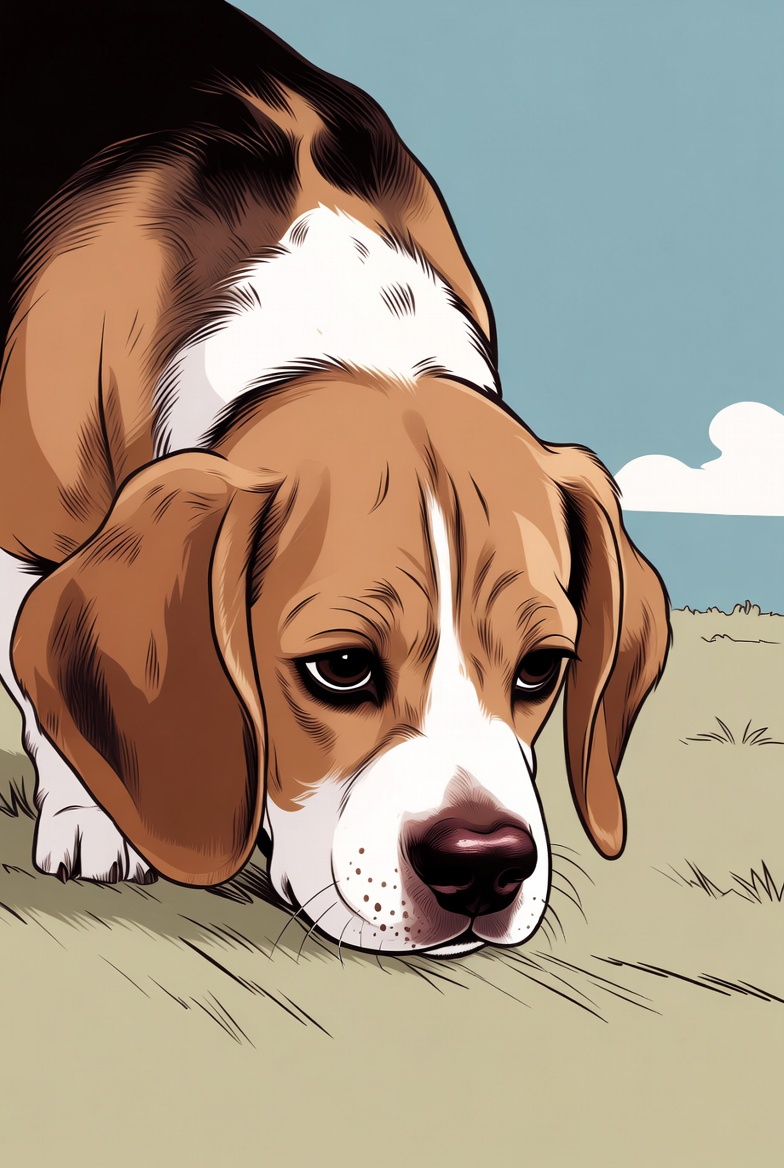 Nose to the Ground
If there is one Beagle signal that generates more concern — and more frustrated training attempts — than any other, it is the nose-to-ground tracking posture.
Many owners interpret their Beagle dropping the nose and pulling forward on the lead as stubbornness, inattention, or disobedience. It is none of these things.
When your Beagle presses their nose to the ground and moves purposefully, they are not ignoring you. Their entire sensory system is occupied processing an amount of olfactory information that is simply beyond human comprehension — with 225 million scent receptors analysing data that arrived minutes, hours, or even days ago. Your Beagle is not being difficult. They are being what they were bred to be: an extraordinarily capable scent hound doing the work they were designed for.
| The decoder includes a dedicated signal for this — Nose to ground, tracking — with a full explanation of what is happening neurologically, why recall training is most critical in this state, and why ten minutes of dedicated sniff time tires your Beagle more than thirty minutes of running. |
Understanding this single signal transforms the lead-walking experience for most Beagle owners. Rather than fighting the instinct, you learn to schedule it — dedicated sniff time, varied routes, nose-work games — so that your Beagle is fulfilled, not frustrated.
The Bay — Understanding It Changes Everything
No discussion of Beagle communication is complete without spending time on the bay.
The Beagle bay is one of the most distinctive sounds in the dog world: a long, melodic, carrying howl that evolved specifically to alert hunters across large distances in open country. When your Beagle bays, they have found a scent trail and are in full hunting drive. This is not nuisance barking. This is not disobedience. This is your Beagle doing precisely what five centuries of selective breeding designed them to do.
The most important thing to understand about the bay is that punishing it is both ineffective and counterproductive. It is instinctive, deeply satisfying for your Beagle, and suppressing it without addressing the underlying drive creates frustration that usually finds a different outlet. The right approach is to manage the triggers, ensure your Beagle gets adequate scent work so the drive is fulfilled, and build a quiet cue that is rewarded heavily and consistently.
A fulfilled Beagle bays far less than a frustrated one. The key is not silence — it is satisfaction.
The decoder covers the bay in full, including the history behind it, the distinction between it and the alert bark, and specific guidance on responding constructively.
Five Benefits of Using the Decoder Regularly
- You stop misreading normal Beagle behaviour as disobedience. The nose-to-ground posture, the bay, the independent streak — these are features of the breed, not flaws. Understanding them changes how you interact with your dog.
- You catch stress signals early. A Beagle showing flattened ears, a tucked tail, and averted gaze is asking for help quietly and politely. Reading these signals early means you can help before things escalate.
- Training becomes more effective. Every training interaction is more productive when you can read whether your Beagle is attentive and ready, overstimulated and scattered, or stressed and checked out.
- You deepen the bond. Beagles are pack animals at their core — they are wired for connection and communication. When you respond to their signals accurately, you become a more intelligible, trustworthy pack member in their eyes.
- You develop lasting fluency. The decoder is a learning tool as much as a reference tool. Over time, the signals become second nature — and you will find yourself reading your Beagle's state before you even pick up your phone.
Separation Anxiety — A Note for Beagle Owners
Beagles are prone to separation anxiety more than many breeds — a direct consequence of their pack-dog wiring. A Beagle is genuinely happiest with company, and a Beagle left alone without sufficient preparation, enrichment, and gradual independence training will often communicate that distress loudly and clearly — through the whine, the bay, and destructive behaviour.
The decoder includes a specific signal for the whine, with guidance on distinguishing between a needs-based whine (I need to go outside, I am uncomfortable) and a connection-seeking whine (I am lonely, I need reassurance), and clear advice on how to respond to each without inadvertently reinforcing the behaviour.
If you are concerned about your Beagle's separation anxiety, the decoder is a starting point — but we also recommend speaking to your vet and working with a professional trainer who specialises in this area.