
Beagle Feeding and Nutrition
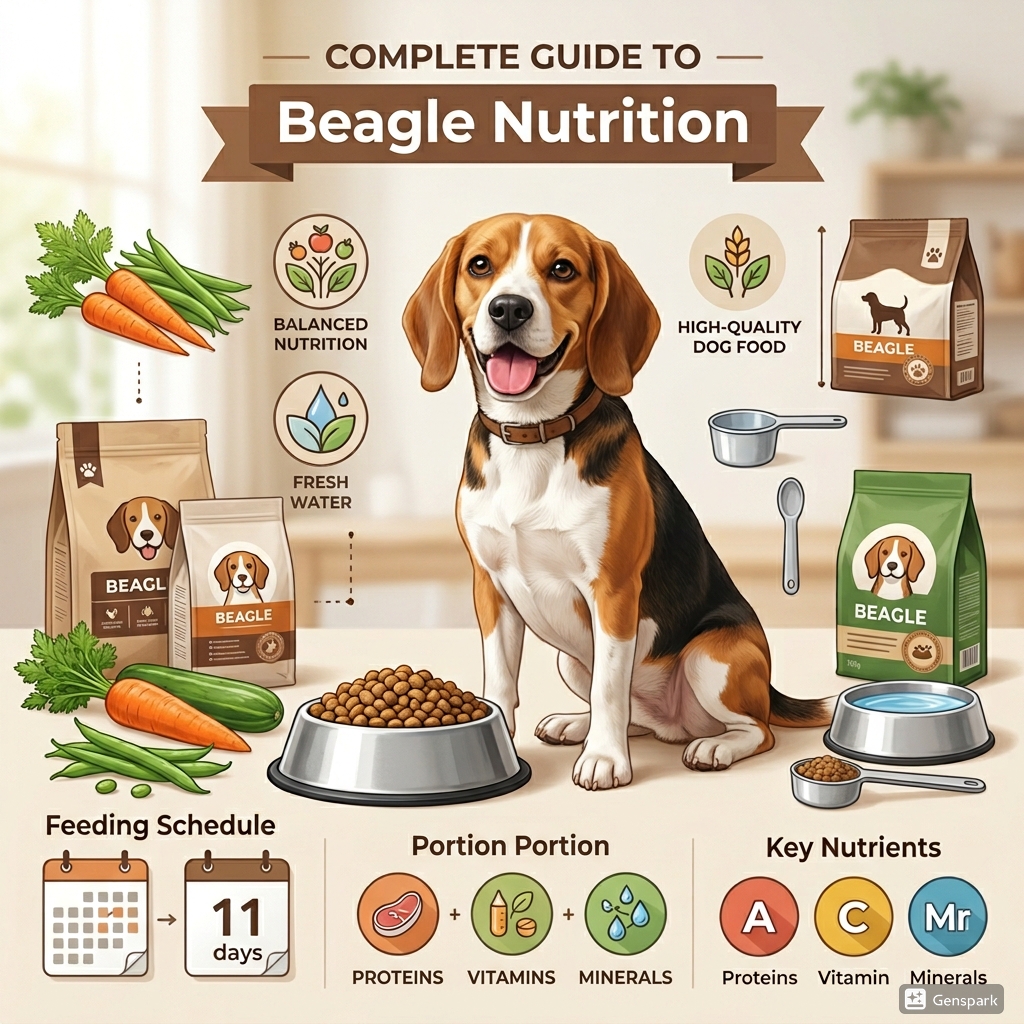 If you share your home with a Beagle, you already know one thing with certainty. This dog is enthusiastic about food. Beagle feeding and nutrition is a topic that matters not just for daily wellbeing but for long-term health — because the Beagle's powerful food motivation, combined with a metabolic profile that favours weight gain, makes feeding decisions genuinely consequential.
The challenge for Beagle owners is that general feeding guides rarely account for a scent hound's particular biology. The Beagle was bred to work all day on minimal rations — its body is efficient, its appetite is not self-limiting, and its nose can locate a treat you hid three days ago. Understanding Beagle nutrition means understanding the breed, not just the macronutrients.
Whether you are navigating beagle nutrition for a new puppy or revisiting what your adult Beagle should be eating, this guide gives you practical, breed-aware answers you can use from today.
What Should I Feed My Beagle?
Beagle nutrition centres on a complete, life-stage-appropriate commercial food — puppy formula for the first 12 months, transitioning to adult food thereafter. Prioritise a named protein source as the first ingredient, a fat content of 12–16% for active adults, and a feeding schedule of structured meals rather than free-choice access. Beagles require careful portion control at every life stage to prevent obesity.
Understanding Beagle Nutrition
The Breed Behind the Bowl
Beagle nutrition cannot be separated from breed history. The Beagle is a scent hound developed for long days of tracking in packs — a working dog designed for sustained energy expenditure over rough terrain, often with limited feeding between hunts. That metabolic history means the Beagle's body is highly efficient at extracting energy from food and storing it — an advantage in the field, a liability on the sofa.
Breed-specific nutritional considerations:
- High food motivation. The Beagle's nose and food drive are genetically linked to its hunting instinct. This is a useful training asset but a significant management challenge — a Beagle that gets into the food cupboard is not "naughty"; it is fulfilling a deep biological directive.
- Obesity predisposition. Studies in veterinary science consistently list Beagles among the top five breeds for obesity prevalence. Up to 40% of Beagles in pet populations are estimated to be overweight or obese — a statistic that reflects owner feeding habits more than the breed's biology.
- Ear and skin sensitivity. Beagles have a higher-than-average incidence of environmental and food allergies. Diet choices can directly influence ear infection frequency, skin condition, and coat quality.
- Scent hound energy profile. Beagles have moderate to high energy needs when adequately exercised, but rapidly gain weight when under-exercised without caloric adjustment.
These are the factors that should shape every beagle nutrition decision — before you even look at a product label.
What to Feed Your Beagle Puppy
Building a Strong Foundation
The puppy diet you choose lays the physiological foundation for your Beagle's adult health. The growth phase — particularly the first six months — is when bone density, muscle mass, joint structure, and neurological architecture are developing. A puppy diet that is incomplete, imbalanced, or poorly formulated cannot be corrected once the developmental window closes.
What to look for in a Beagle puppy diet:
- Named protein source first. Chicken, turkey, salmon, or lamb listed as the first ingredient. Avoid products where the first ingredient is a grain or where "meat meal" appears without a species designation.
- Minimum 28% crude protein (dry matter basis). Supports muscle development and coat density through the growth phase.
- DHA from fish oil. Supports neurological development during the sensitive developmental stages of puppyhood — critical for a breed whose scent detection and problem-solving abilities are core to its identity.
- No excessive calcium supplementation. Complete puppy foods are already calcium-balanced. Additional calcium disrupts the Ca:P ratio and increases risk of developmental orthopaedic disease in growing puppies.
- AAFCO or FEDIAF "complete and balanced for growth" statement. A non-negotiable marker of a nutritionally complete product.
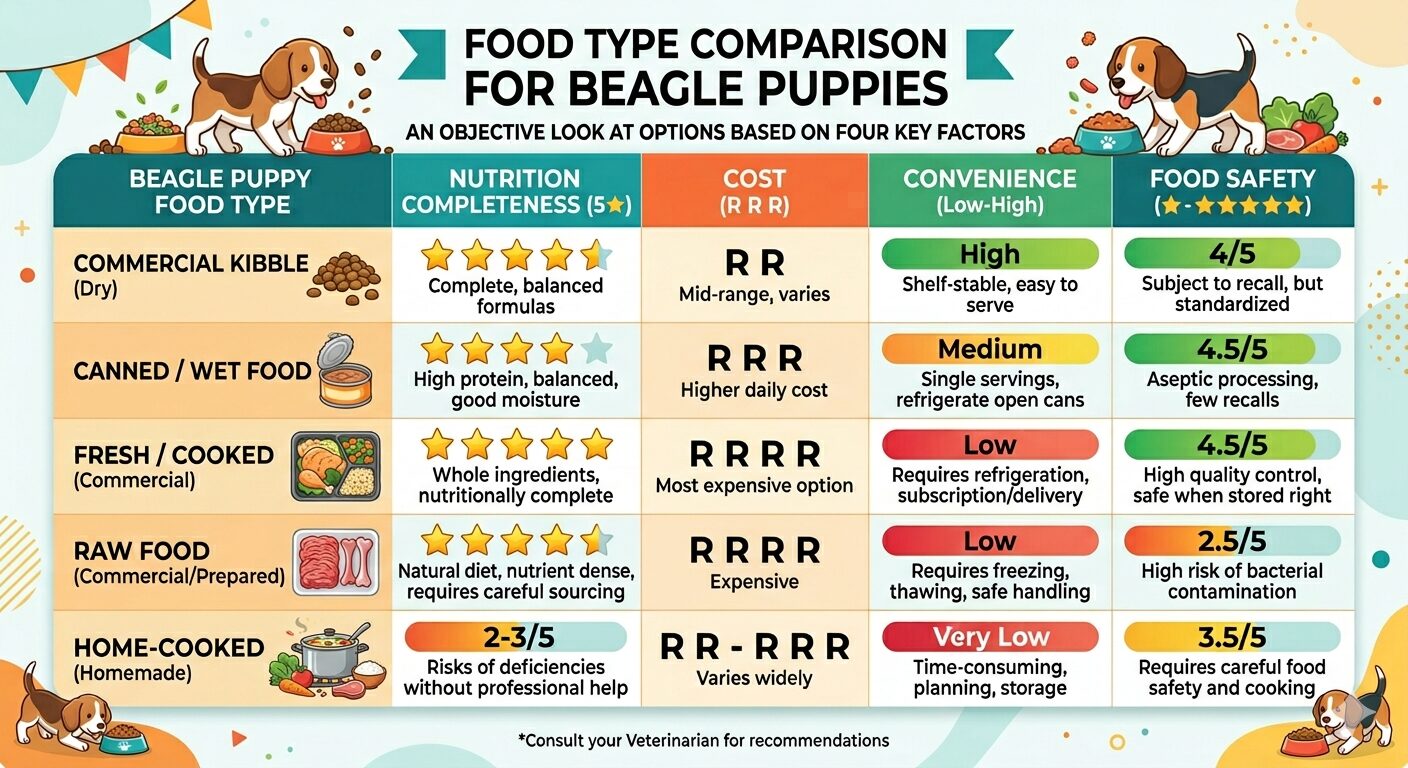
Feeding Schedule
Routine That Works for the Beagle Brain
A Beagle without a structured feeding schedule is a Beagle looking for food at all hours. The breed's food drive is persistent and inventive — consistent meal times are not just logistically convenient, they are a genuine behavioural management tool. A Beagle that knows food comes at 7am and 6pm is a calmer, less food-obsessed dog than one fed irregularly.
Recommended feeding schedule by age:
Age Meals Per Day Timing Guidance
8–12 weeks 4 meals Space evenly; 5–6 hours between meals
3–6 months 3 meals Morning, midday, evening
6–12 months 2–3 meals Transition toward twice daily
12 months +2 meals Morning and evening; fixed times
Key feeding schedule habits for Beagle owners:
- Use a raised food bowl at the correct height (elbow level) to reduce the risk of bloat and support comfortable eating posture
- Remove uneaten food after 15–20 minutes — do not leave food down
- Never free-feed a Beagle — this breed will overeat to the point of vomiting and then return to the bowl
- In multi-pet households, feed separately — Beagles are competitive eaters and will consume another animal's food without hesitation
Portion Control for Beagles
Precision Over Guesswork
Portion control is the daily practice that determines whether your Beagle stays healthy or gradually trends toward the weight problems that affect so many dogs in this breed. The body condition score (BCS) method — a 9-point scale used by veterinarians — is the most reliable tool available to owners for assessing whether current portions are correct.
A Beagle at ideal body condition (BCS 4–5/9):
- Ribs are felt easily with light pressure but are not visible
- A waist is visible from above — the body narrows between the ribcage and hips
- The abdomen tucks up when viewed from the side
- No visible fat deposits over the hips, spine, or tail base
Approximate daily portion guide for Beagles (dry kibble):
Age / Weight Daily Amount Notes
Puppy 8–16 weeks (3–4 kg) 100–140 g Divided across 4 meals
Puppy 4–6 months (5–7 kg) 140–180 g Divided across 3 meals
Puppy 6–12 months (7–10 kg) 160–200 g Transitioning to 2–3 meals
Adult (9–11 kg) 160–210 g Adjust for activity level and BCS
Use a kitchen scale, not a cup — volumetric measurement introduces significant inaccuracy, particularly for differently sized or shaped kibble. The portion control principles that underpin these guidelines are explored in depth in the Puppy Feeding and Nutrition guide at corgicrew.co.za, which covers BCS methodology and caloric management applicable across breeds — worth reviewing if you are managing more than one dog or want a deeper grounding in the methodology.
Weight Management
The Most Critical Health Habit for Beagles
Weight management for Beagles is not optional — it is the single most impactful health intervention an owner can make. Research in veterinary science has demonstrated that even moderate overweight status in dogs increases the risk of diabetes, joint disease, cardiovascular strain, and reduced life expectancy. For a breed already predisposed to obesity, proactive weight management is a form of preventive care.
The hidden calorie problem in Beagle households:
- A single pig's ear treat contains approximately 230 kcal — roughly equivalent to a full meal for a 10 kg Beagle
- Dental chews, while beneficial for oral health, are frequently calorie-dense and not counted in the daily total
- Table scraps — even occasional — disrupt caloric balance and teach the Beagle to lobby persistently at mealtimes
- The Beagle's "hungry eyes" are extraordinarily effective at communicating distress. Do not let your dog's expression override what the body condition score is telling you.
If your Beagle is overweight:
- Confirm with a veterinary weigh-in — scales at home are less accurate for small dogs
- Calculate the target calorie reduction (typically 20–25% below maintenance) with veterinary input
- Switch to a "light" or "weight management" formula — do not simply reduce standard food, as this creates micronutrient shortfalls Increase structured exercise — an additional 15 minutes of walking per day has measurable weight impact in small breeds
- Track progress monthly — expect 1–2% body weight loss per week as a safe rate
Treats and Training Rewards
Getting the Balance Right
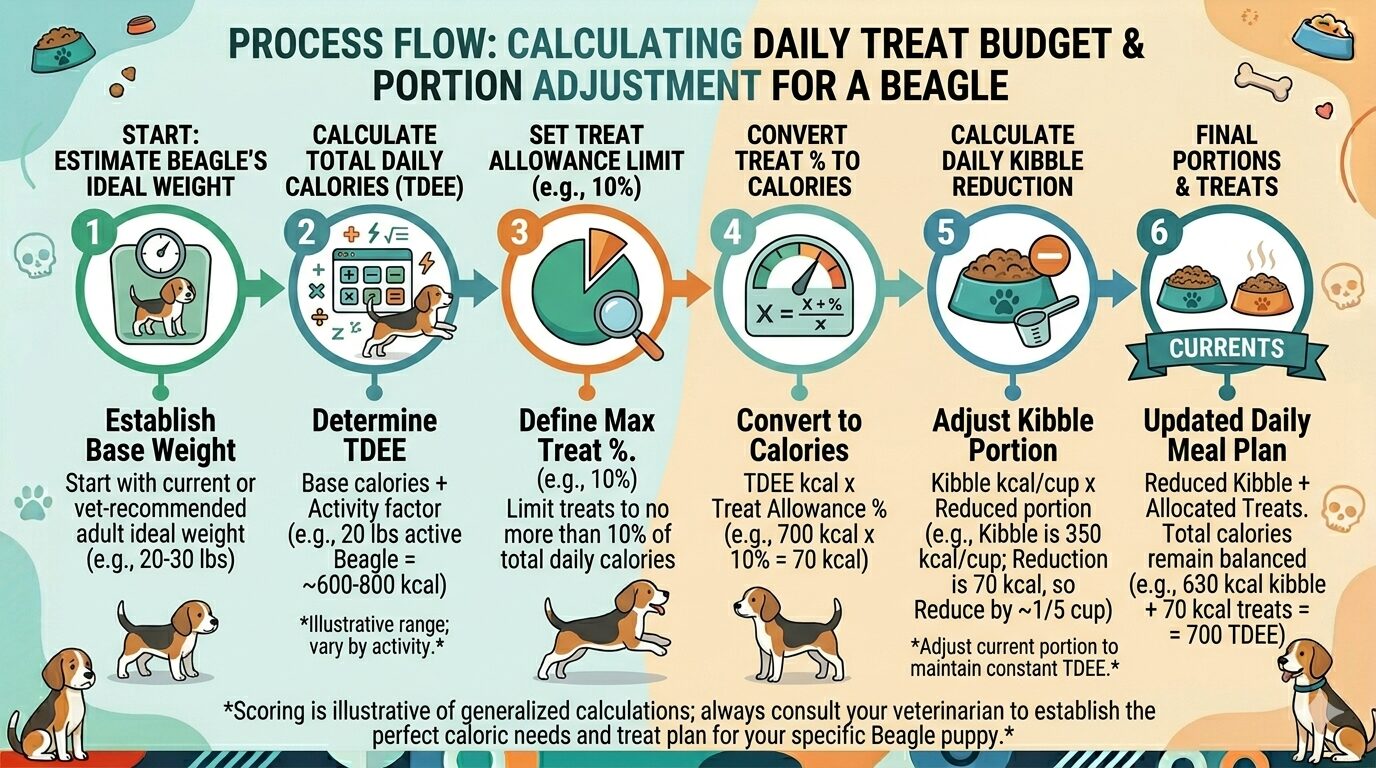
Treats are an important element of beagle nutrition — and an important training tool. Beagles respond exceptionally well to positive reinforcement, and food reward is often the most effective motivator for this breed. The key is accounting for treats within the total daily caloric budget, not in addition to it.
Recommended treats for Beagles:
- Cooked chicken or turkey pieces (no seasoning, no skin) — high protein, low fat, high reward value
- Small carrot pieces — low calorie, natural crunch, well-tolerated by most Beagles
- Commercial training treats under 5 kcal per piece — essential for high-frequency training sessions
- Blueberries and apple slices (no seeds or core) — antioxidant value, low calorie
Treats to avoid:
- Rawhide chews — digestive obstruction risk; no nutritional benefit
- Pig's ears and similar fat-heavy treats — extremely high calorie; reserve for rare use only
- Foods containing xylitol — toxic; check all commercial products before use
- Grapes, raisins, onions, garlic, chocolate — established toxicity; no exceptions
The 10% rule. Treats should account for no more than 10% of daily caloric intake. For a 10 kg adult Beagle consuming approximately 650 kcal per day, the treat budget is 65 kcal — roughly equivalent to 10–12 small training treats. Reduce kibble by the same caloric amount on treat-heavy training days.
Hydration and the Beagle
What Owners Often Miss
Water intake is frequently overlooked as a component of beagle nutrition, but its role in digestion, kidney function, coat quality, and energy levels is foundational. A Beagle puppy requires approximately 60–80 ml of water per kilogram of body weight daily, with higher needs during warm weather or after active exercise.
Beagle-specific hydration notes:
Beagles are enthusiastic drinkers when water is fresh and bowls are clean — if your Beagle is avoiding the water bowl, check whether the bowl needs cleaning or the water is stale
The Beagle's pendulous ears create a warm, moist microclimate at the base of the ear canal — chronic mild dehydration, combined with poor ear airflow, increases the risk of yeast overgrowth. Adequate hydration is part of ear health management.
Dogs on exclusively dry food diets typically drink significantly more than those on wet food — monitor intake and adjust if concerned
Freeze a small amount of low-sodium broth in an ice cube tray during summer — it encourages water intake and provides a stimulating enrichment activity for a food-motivated breed
Signs of dehydration to watch for:
Loss of skin turgor (skin does not spring back when gently lifted), dry gums, dark concentrated urine, reduced energy, and reduced appetite. Puppies dehydrate faster than adult dogs and should be monitored closely in warm weather.
Supplements for Beagles
What the Evidence Supports
For Beagles fed a complete, nutritionally balanced commercial diet, most supplements are unnecessary. However, specific evidence-supported supplements are worth considering based on your individual dog's needs and life stage.
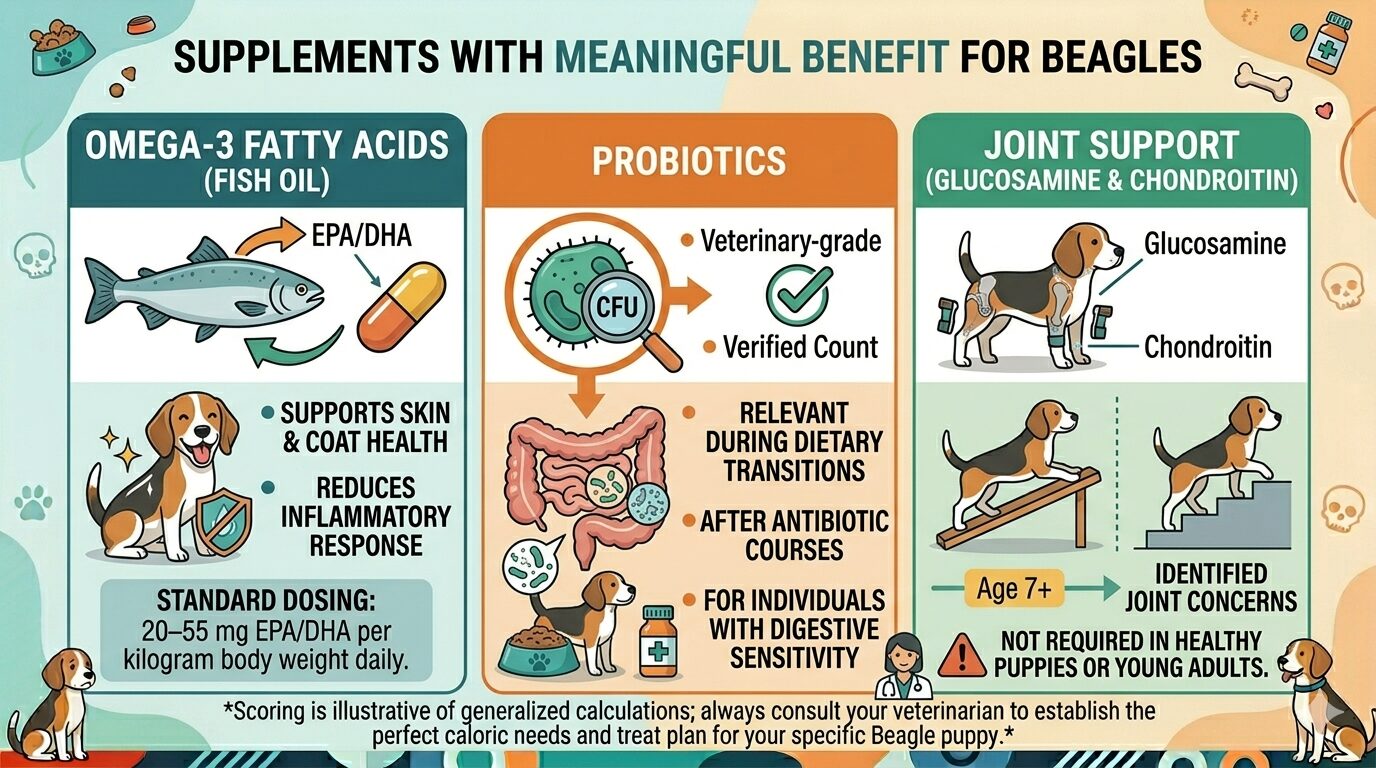
Supplements with meaningful benefit for Beagles:
- Omega-3 fatty acids (fish oil). Directly supports the Beagle's skin and coat health, which is often challenged by the breed's allergy predisposition. Additionally reduces inflammatory response in dogs with food sensitivities. Standard dosing. 20–55 mg EPA/DHA per kilogram body weight daily.
- Probiotics. Particularly relevant for Beagles during dietary transitions, after antibiotic courses, and for individuals with documented digestive sensitivity. A veterinary-grade probiotic with a verified CFU count is preferable to generic pet store products.
- Joint support (glucosamine and chondroitin). Relevant for Beagles over seven years of age or those with identified joint concerns. Not required in healthy puppies or young adults.
What to avoid supplementing without veterinary direction:
- Calcium. As with all breeds, supplementing calcium in puppies fed a complete diet disrupts CaP balance and increases developmental orthopaedic disease risk. This risk is documented and well-established.
- Vitamin A and D megadoses. Fat-soluble vitamins accumulate in tissue and can cause toxicity. A balanced commercial diet already meets requirements.
For a broader comparison of supplementation approaches across breeds, the Puppy Feeding and Nutrition guide at corgicrew.co.za provides an accessible overview of the supplement landscape that complements this Beagle-specific section.
Moving from Puppy to Adult Food
Making the Transition Smooth - the transition from puppy food to an adult diet is a significant nutritional shift that should be managed carefully over 7–10 days. For Beagles, this transition typically occurs at 12 months — earlier than for large and giant breeds, which benefit from puppy-specific nutrition for longer.
Signs your Beagle is ready for adult food:
Approaching 12 months of age
Growth has visibly plateaued — weight is stabilising
Spaying or neutering has taken place (if applicable — reduced caloric needs post-procedure make the transition to adult food an appropriate dietary reset point)
Transition schedule
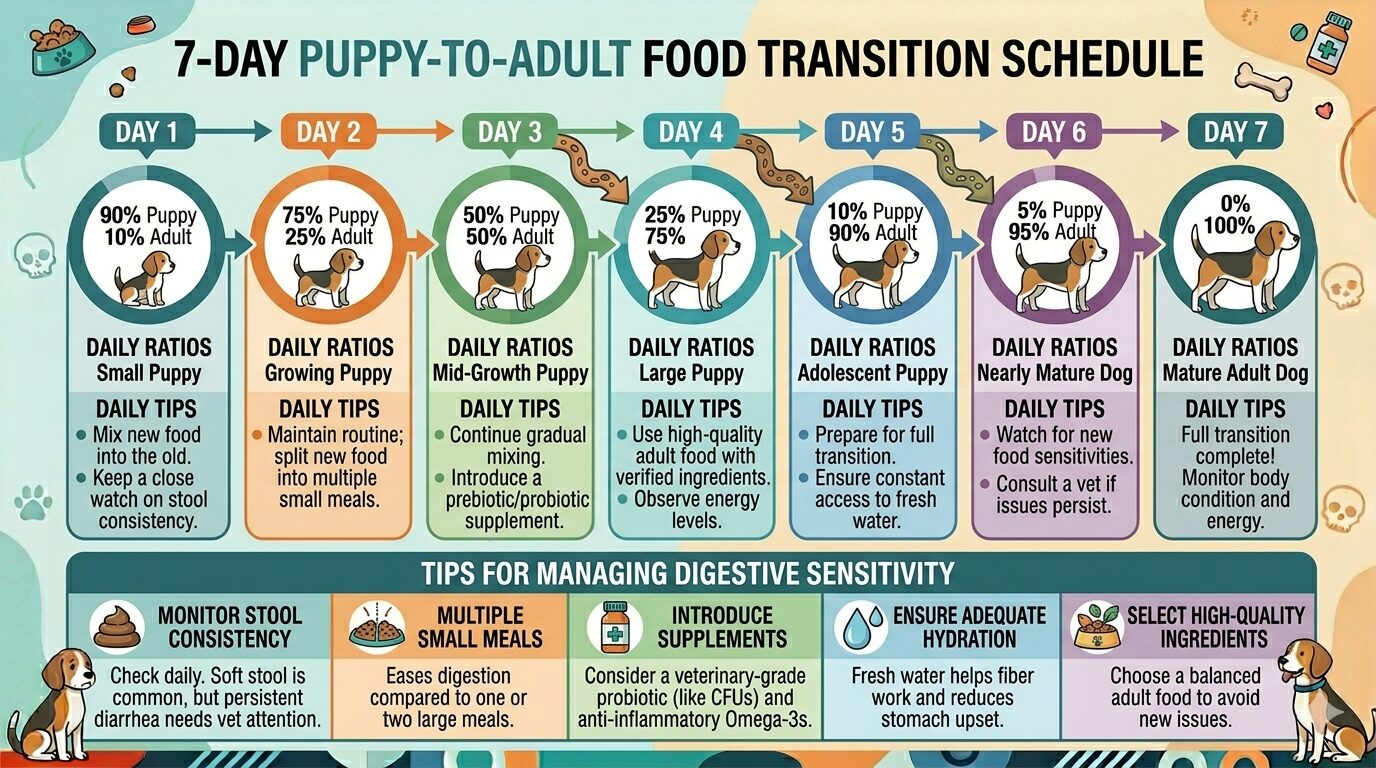
Adult formulas have reduced caloric density, lower protein targets (18–25% dry matter basis), and reduced DHA requirements. For Beagles, the weight management implications of this transition are significant — adult food supports a lean body condition more readily than the calorie-dense puppy formula, and it is a natural point to re-calibrate daily portion sizes based on current adult weight.
If digestive sensitivity appears during the transition, slow the schedule down to 14 days rather than 7 — the Beagle's digestive system responds well to gradual change. A short course of veterinary-grade probiotics supports the gut flora adjustment.
 Expert Insight
 Expert Insight
From a canine behaviourist and Beagle specialist with 15 years of breed-specific experience:
"The piece of Beagle feeding advice that owners rarely hear is this. The food bowl is also a training tool, whether you intend it to be or not. Every meal your Beagle eats without working for it is a missed opportunity for enrichment and a small step toward the boredom-driven behaviours that Beagle owners find frustrating.
I recommend introducing puzzle feeders, sniff mats, and scatter feeding from eight weeks of age. Spread the puppy's regular kibble across a sniff mat instead of putting it in a bowl. Make the meal last 15 minutes instead of 45 seconds. You are not adding food — you are adding engagement. The result is a Beagle that is mentally satisfied by its feeding routine rather than perpetually looking for the next source of stimulation. This single shift reduces counter-surfing, food-guarding, and obsessive mealtime behaviour in most of the dogs I work with, without changing a single gram of what the dog is eating."
 FAQ. Beagle Feeding and Nutrition
 FAQ. Beagle Feeding and Nutrition
1. How much should I feed my Beagle puppy each day?
Portion size depends on the specific food's caloric density and your puppy's age and current weight, but as a general guide, Beagle puppies between 8 and 16 weeks typically need 100–140 g of premium dry kibble daily, split across four meals. Always use the body condition score to calibrate — if ribs become difficult to feel, reduce portions. If your puppy appears lethargic or very lean, increase slightly and consult your vet.
2. Why is my Beagle always hungry even after eating?
This is a breed characteristic, not a sign of underfeeding in a well-portioned dog. Beagles have a genetically strong food drive linked to their scent-hound hunting history. Verify your dog's body condition score before increasing food. If the BCS is ideal, the hunger signals are behavioural rather than physiological — puzzle feeders and enrichment feeding help manage this effectively.
3. What are the best foods for a Beagle with allergies?
Limited-ingredient diets (LID) with a single novel protein source — typically duck, venison, or salmon — are the most common starting point for Beagles with suspected food allergies. A true hydrolysed protein diet prescribed by your veterinarian is the gold standard for allergy investigation. Avoid changing foods too frequently during an allergy investigation — it takes 8–12 weeks to assess the full effect of a dietary change.
4. Can Beagles eat vegetables?
Yes — many vegetables are safe and beneficial. Carrots, green beans, courgette, cucumber, and broccoli (in small amounts) are all well-tolerated and low in calories. Avoid onions, garlic, leeks, and grapes/raisins — these are toxic to dogs. Corn on the cob is a choking hazard regardless of whether the corn itself is safe.
5. How do I prevent my Beagle from becoming overweight?
Measure food with a kitchen scale, not a cup. Treat calories count toward the daily total. Feed at structured times rather than free-choice. Assess body condition score monthly. Exercise your Beagle for a minimum of 45 minutes per day — a Beagle that meets its physical activity needs is far easier to keep at a healthy weight than one that is under-exercised.
6. Is it safe to feed my Beagle a grain-free diet?
The current evidence on grain-free diets in dogs is mixed. The US FDA investigated a possible link between grain-free diets (particularly those high in legumes as protein replacement) and dilated cardiomyopathy (DCM) in dogs. While the investigation is ongoing and causality is not confirmed, most veterinary cardiologists currently recommend choosing grain-inclusive foods from FEDIAF-compliant manufacturers unless there is a specific diagnosed grain intolerance. Discuss this with your vet before switching.
7. Should I feed my Beagle at the same time every day?
Yes — consistency in the feeding schedule has measurable effects on digestive regularity, appetite regulation, and behaviour. Beagles are creatures of routine. Fixed meal times reduce anxiety around food, decrease food-guarding behaviours, and make it easier to monitor appetite changes that can signal health issues.
8. How do I know if my Beagle puppy is gaining weight too quickly?
Rapid weight gain in a puppy is characterised by ribs that become increasingly difficult to feel, loss of waist definition from above, and reduced activity due to carrying excess weight. Weigh your puppy monthly and plot it against a Beagle growth chart. If weight-for-age is consistently above the 75th percentile, reduce portions by 10% and reassess in two weeks.
9. Are dental chews a healthy part of my Beagle's diet?
Quality dental chews that carry a VOHC (Veterinary Oral Health Council) seal of acceptance are a legitimate dental health tool — but their caloric content must be counted in the daily total. Many popular chews contain 60–100 kcal per piece. For a 10 kg Beagle, one chew per day represents approximately 15% of daily caloric intake. Account for it, and adjust kibble accordingly.
10. At what age should I switch my Beagle from puppy to adult food?
Twelve months is the standard transition point for Beagles. Unlike large breeds, Beagles reach nutritional maturity relatively early. Post-neutering, the transition to adult food is an ideal time to switch — spaying and neutering reduces metabolic rate, and adult formulas with lower caloric density support a healthy weight better in the post-operative period. Transition gradually over 7–10 days to minimise digestive disruption.
Conclusion
The three most important takeaways for Beagle feeding and nutrition are these. First, that this breed's food drive is biological, not behavioural — it must be managed with structure and consistency rather than fought against. Second, that portion control and regular body condition assessment are the daily practices that determine whether your Beagle remains healthy or drifts toward the weight problems that affect the majority of this breed in pet populations. Third, that the transition from puppy diet to adult food at twelve months is a meaningful milestone — handled correctly, it sets your dog up for a leaner, healthier adult life.
Beagle nutrition done well does not feel restrictive. It feels like a calm, routine, confident relationship with food — for your dog, and for you. The Nutrition category on BeaglePuppies.co.za exists to give you exactly that.
 Call to Action
 Call to Action
Nutrition is just one part of raising a happy, well-adjusted Beagle. If you are building your knowledge base as a Beagle owner, the Beagle Socialisation Guide is an essential companion — covering how early experiences shape your Beagle's confidence, behaviour, and relationship with the world around it.
For an in-depth look at everything this remarkable breed involves, the Complete Guide to the Beagle covers health, temperament, exercise, training, and care from puppy to senior — a resource worth bookmarking.
And for Beagle owners wanting a deeper look at show and breed-quality development, the Raising Show-Quality Puppies guide at pemberdiamonds.co.za offers professional-level insight into how the developmental stage framework underpins excellence in any breed.