Understanding Beagle Growth & Maturity
A Guide for Every Owner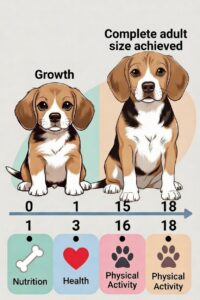
Beagle Growth & Maturity - if you've welcomed a Beagle puppy into your home, you've probably marveled at how quickly those floppy ears and curious eyes seem to change week by week. Beagles grow at a steady but noticeable pace, transforming from tiny, wobbly newborns into sturdy, scent-driven adults. While every dog is unique, understanding the typical timeline for physical development helps you provide the best nutrition, exercise, and care to support healthy growth and prevent issues down the line. In this article, we'll break down the key facts about when and how Beagles mature physically, including size milestones, the role of genetics, and why protecting those growing bones matters so much.
When Do Beagles Reach Their Full Size?
 Beagles generally achieve their complete adult size by around 18 months of age. This marks the point where both height and weight stabilize for most individuals. However, there's variation based on the dog's final adult weight: smaller Beagles tend to finish growing sooner than larger ones. For instance, a Beagle genetically set to reach about 9 kg (roughly 20 pounds) might stop growing as early as 14 months, while one headed toward 11 kg (about 25 pounds) could continue filling out closer to the full 18-month mark.
Height development typically wraps up earlier than weight. Reliable sources indicate that most Beagles reach their adult shoulder height—usually 33–40 cm (13–15 inches, depending on the AKC variety of under 13 inches or 13–15 inches)—by around 8 months. After that, the focus shifts to gradual weight gain and muscle development as the body "fills out".
The Growth Pattern
Rapid Early Gains, Then a Slow Finish
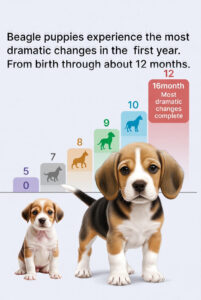
Beagle Growth & Maturity, Beagle puppies experience the most dramatic changes in the first year. From birth through about 12 months, you'll see significant increases in both height and weight as bones lengthen and the puppy builds muscle and body mass. Growth is especially fast in the early months: a newborn might weigh just 140–280 grams (5–10 ounces), but by 2 months, many are around 2–5 kg, and by 6 months, weights often range from 5–8 kg (12–18 pounds) depending on the size category.
After the first year, the pace slows considerably. From 12 months onward, any additional growth is usually minor and gradual, with small increases in weight and slight filling out of the frame continuing up to 14–18 months. This slower phase is when your Beagle transitions from looking like a gangly adolescent to a well-proportioned adult.
The Importance of Growth Plates and Safe Exercise
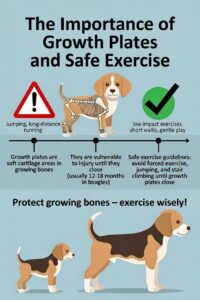 Even if your Beagle looks fully grown in height and weight before 18 months, skeletal maturity isn't complete until the growth plates close—typically around 18 months for this medium-sized breed. Growth plates are the soft, cartilage-filled zones at the ends of long bones where active cell division allows bones to elongate. Once growth finishes, these plates harden into solid bone.
During this vulnerable window, excessive high-impact or repetitive strenuous exercise can stress or injure the plates. What might cause only a temporary sprain in an adult dog could lead to more serious problems in a puppy, such as uneven bone growth, limb deformities, or shortened legs. To keep things safe:
- Follow general puppy exercise guidelines (e.g., about 5 minutes of structured activity per month of age, up to twice daily, focusing on low-impact play like short walks, gentle fetch, or swimming).
- Avoid prolonged running, jumping from heights, or intense activities like agility until plates close.
- Always prioritize free play at the puppy's own pace over forced endurance.
Consult your vet for tailored advice, especially if your Beagle is very active or shows any signs of lameness.
How Genetics Determine Final Size
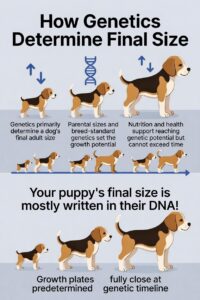
A Beagle's ultimate adult size is primarily driven by genetics. The most accurate predictor isn't a generic chart—it's the actual sizes of the puppy's parents, older siblings, and close relatives. If the dam and sire are on the larger side (closer to 38 cm / 15 inches tall and 11–13 kg), your puppy is more likely to follow suit. Breeders often provide this insight, and observing family photos or meeting the parents can give you a realistic expectation for your pup's final height (33–40 cm at the shoulder) and weight (typically 9–13 kg, varying by the 13-inch or 15-inch variety).
Nutrition, health, and neutering timing can influence weight slightly, but genetics set the foundation. Overfeeding during growth can lead to excess weight that persists into adulthood, as Beagles are prone to obesity.
Supporting Healthy Growth Every Step of the Way
Watching your Beagle puppy grow is one of the greatest joys of ownership—from those clumsy first steps to the confident stride of an adult hound. By understanding these growth patterns, choosing appropriate puppy food for steady development, providing balanced exercise, and monitoring weight, you're helping your Beagle build a strong, healthy body for a long, active life (often 12–15 years or more).
Keep regular vet check-ups, track your pup's progress against breed-typical ranges, and enjoy every phase—the rapid puppy zoomies, the teenage mischief, and the settled companionship of adulthood. Your Beagle's journey to maturity is as full of personality as it is of physical change. Here's to many happy years of tail-wags, nose-to-the-ground adventures, and that unmistakable Beagle charm!