History of the Beagle
Ancient Origins
The Beagle's history traces to small hound-like dogs used for hunting, with records of similar pack hounds in Greece as early as the 5th century B.C., described by Xenophon in his treatise on hunting. Small hounds for chasing rabbits and hares existed in England before the Roman arrival in 55 B.C., with references to Beagle-type dogs for foot hunting of hare dating to around 400 B.C. in Greece and 200 A.D. in Britain. Roman introductions likely interbred with native British hounds, followed by centuries of blending with European breeds. Key ancestors include the Talbot Hounds—large white scenthounds brought by William the Conqueror in the 11th century—and possibly the extinct Irish Kerry Beagle (small black-and-tan, Bloodhound-like). The modern Beagle developed in England as a scent hound for "beagling" (pack hunting of rabbits/hares). The name "Beagle" likely derives from French "begueule" (open throat, for its baying) or Celtic "beag" (small), reflecting its size and vocal traits


Medieval and Renaissance Development
By the 15th century, the Beagle was established as a small scent hound in England, France, Greece, and Italy. The term first appeared in English literature around 1475 (e.g., *The Squire of Low Degree*), and was used generically for smaller hounds in the Middle Ages. Mentions appear in Geoffrey Chaucer and William Shakespeare (e.g., "a beagle, true-bred" in *Twelfth Night*). In the Elizabethan era, Queen Elizabeth I owned "pocket beagles" (or "singing/glove beagles"), about 9 inches tall, small enough to fit in a hand or pocket—bred for amusement and their melodious voices, sometimes released after larger hounds. By the 1500s, Beagles were called the "foothound of our country, indigenous to the soil," with English gentlemen keeping packs for hares alongside larger hounds for deer.
18th and 19th Century Refinement
Hare hunting with Beagles declined in the mid-18th century as foxhunting rose with larger English Foxhounds, but it persisted among farmers in southern England, Wales, and Ireland. Two types emerged: the slow, heavy Southern Hound (excellent scent but ponderous) and the faster North Country Beagle (weaker nose). Mid-19th-century efforts focused on attractive, functional Beagles. Modern development began in the 1830s with Reverend Phillip Honeywood's Essex pack, blending North Country Beagles, Southern Hounds, and possibly Harriers. In the 1840s-1850s, Thomas Johnson refined rough-coated (now extinct) and smooth-coated varieties. By 1856, "Stonehenge" (John Henry Walsh) described varieties with standards of 10-15 inches, resembling miniature Southern Hounds. The Beagle Club formed in 1890 (first standard), the Association of Masters of Harriers and Beagles in 1891, with packs reaching 44 by 1902. A Pocket Beagle standard existed in 1901, but lines are extinct. UK shows began (e.g., Peterborough 1889).

Introduction to America and Early Standardization
Beagle-like hounds arrived with English settlers pre-Civil War. Imports started in the 1840s, but serious breeding began ~1870 with General Richard Rowett (Illinois) importing fine British hounds, improving looks and sparking demand. Further imports (e.g., by Captain Assheton, James Kernochan) shaped the American Beagle as a "miniature English Foxhound." By the 1880s, the breed solidified; the first AKC registration was Blunder in 1885. The National Beagle Club formed ~1888, adopting a standard with two size varieties (13 inches and under; 15 inches and under) for fair competition in trials/shows. The U.S. standard, based on Rowett imports and refined by 1887, prioritizes hunting ability with few changes since 1957 (including "Packs of Beagles"). First U.S. field trials occurred in the 1890s.
20th Century Popularity and Cultural Impact
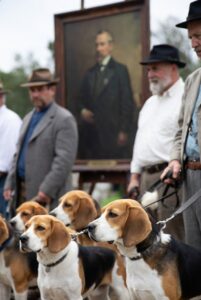
Uniform type emerged via clubs/shows; first U.S. Best in Show for a Beagle was 1901. Post-WWI revival in UK and growth in U.S. followed. Mid-century surge came from cute appearance and merry temperament, featured in Norman Rockwell paintings (e.g., 1943 *Saturday Evening Post* "The Homecoming G.I."). Charles M. Schulz introduced Snoopy (a Beagle) in *Peanuts* on October 4, 1950, boosting fame via comics, TV, parades (e.g., Macy's), and honorary AKC registration as Beagle-1. Beagles topped AKC charts in 1953 (surpassing Cocker Spaniels). President Lyndon B. Johnson's Beagles "Him" and "Her" (born 1963) were White House pets but caused controversy in 1964 when lifted by ears. The USDA's Beagle Brigade (1984) detects contraband food (~75,000 seizures). Notable wins: Uno (Westminster 2008, first Beagle Best in Show), Miss P (2015). Urbanization split field/show lines, but pack traditions continue (e.g., Institute Farm, Virginia). Beagles remain top-10 AKC popular, often used in detection and research.
Introduction to South Africa and Early Standardization
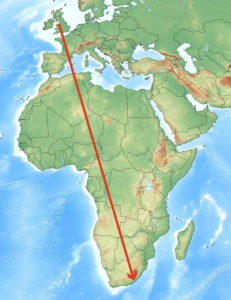
Beagles arrived in South Africa in the late 19th century via British colonial ties. Earliest exhibitions were at Port Elizabeth Shows in 1883-1884 by D'Urban and Walter Dyason. First KUSA (then South African Kennel Club) registrations occurred March 13, 1895: Venus and Ajax (both by Ajax out of Flora, owned by Mr. Wilmot), likely UK imports. Early enthusiasts (Dyasons, Wilmot) reflected Cape Colony settlers importing English hunting breeds for show and limited tracking. No early champions due to point rules. Registrations paused 1934-1948 (WWII impacts, low UK stock post-WWI, limited imports). Primarily eastern/southern regions (e.g., Port Elizabeth/Gqeberha, Eastern Cape), spreading to Gauteng. British standards remain influential. Today, Beagles rank highly in KUSA registrations (often top 10), with clubs like the Beagle Association of Gauteng (2013, only KUSA-affiliated Beagle club) promoting breeding, showing, scent work, and responsible ownership amid family/hobbyist interest.