
Beagle Genetics and Inheritance
 Why can a Beagle detect a rabbit trail hours old across varied terrain while a visually oriented breed misses a treat under its nose? Why do Beagles develop epilepsy, hypothyroidism, and ear infections at rates that frustrate even experienced Guardians? And why, despite centuries of selection for pack hunting, does the modern Beagle retain a genetic architecture closer to its European hound ancestors than to many other modern breeds?
These questions point to a defining truth: **the Beagle is not merely a small hound — it is a scent-processing specialist whose genetics prioritize olfactory capability over virtually every other system, with cascading consequences for health, behavior, and the daily experience of living with one.** Understanding Beagle genetics means understanding a dog built around a nose, and what that prioritization costs elsewhere.
What’s Different About This Breed
The Beagle diverges from the general companion dog in three genetically significant ways: **extraordinary olfactory receptor diversity, a polygenic behavioral architecture optimized for pack-independent scent tracking, and a genetic background that retains more ancestral diversity than many purebreds — but with concentrated risk for specific complex diseases.
Olfactory Genetics
A Nose-Built Genome
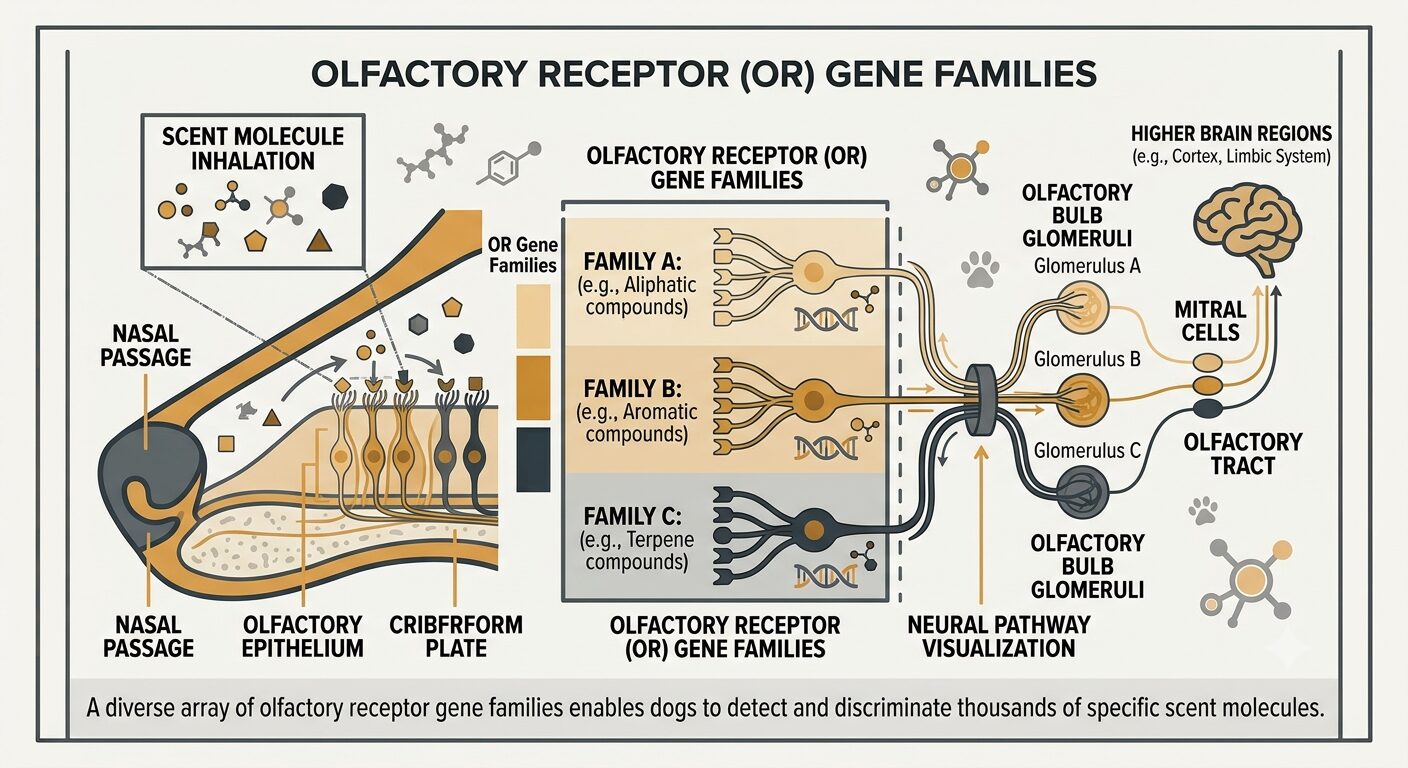
The domestic dog possesses approximately 800 olfactory receptor (OR) genes, of which roughly 20% are pseudogenes (non-functional). Beagles, along with other scent hounds, show distinct OR gene expression patterns compared to sight hounds or non-hound breeds.
Olender et al. (2012) and subsequent canine-specific studies have demonstrated that scent hound breeds exhibit enrichment of specific OR gene families associated with detection of complex organic compounds — the volatile molecules that constitute scent trails. While individual OR gene differences between breeds are still being mapped, the aggregate evidence supports that Beagles possess a functionally distinct olfactory genome optimized for tracking rather than air-scenting or close-range detection.
This is not merely a good nose. It is a genetically distinct sensory system that shapes cognition, attention, motivation, and stress responses. A Beagle's brain allocates disproportionate resources to olfactory processing — functional MRI studies show that scent presentation activates larger cortical regions in Beagles than in non-scent breeds. This has behavioral consequences that Guardians often misinterpret as stubbornness or low intelligence.
Research Spotlight
Olfactory Receptor Diversity in Scent Hounds
Study: Olender et al. (2012), Nature Methods — "Construction of the canine olfactory receptor gene repertoire" (supplemented by Tacher et al., 2021, BMC Genomics — "The canine olfactory receptor gene repertoire")
Sample & Method: Whole-genome sequencing and transcriptome analysis across 10+ breeds, identifying intact OR genes, pseudogenes, and breed-specific expression patterns through RNA sequencing of olfactory epithelium tissue.
Key Finding: Scent hound breeds including Beagles retain higher proportions of intact OR genes within specific subfamilies associated with long-range volatile detection, and show elevated expression of these genes in olfactory tissue compared to non-scent breeds.
Why it matters here: This explains why "trainability" assessments often misclassify Beagles as less intelligent — their cognitive resources are allocated to olfactory processing that standard obedience tests do not measure. A Beagle ignoring a recall command while processing a scent trail is not being disobedient; it is operating from a genetically distinct attention architecture. For Guardians, this means training must work with olfactory motivation, not against it.
 Research Spotlight
Behavioral Genetics
Pack Independence and Selective Attention
Beagles were developed for pack hunting in which individual dogs operate semi-independently, following scent trails at distance from human handlers and making autonomous decisions about trail direction and prey proximity. This selection history produced a behavioral phenotype distinct from breeds developed for close human cooperation (retrievers, herding dogs) or guarding (livestock protection, property defense).
Key behavioral genetic consequences:
- Independence: Beagles show lower biddability (responsiveness to human direction) than cooperative working breeds. This is not a training failure; it reflects genetic selection for autonomous decision-making during scent tracking.
- Food motivation: High food drive in Beagles is genetically linked to metabolic adaptations for sustained energy expenditure during long hunts. This same drive makes Beagles prone to obesity in sedentary pet homes.
- Vocalization: Baying and howling are genetically fixed communication behaviors for pack coordination at distance. Suppression is difficult and may create frustration.
Ilska et al. (2017) found that hound breeds cluster genetically for traits related to prey drive, exploration, and low fearfulness — consistent with selection for dogs that will independently pursue game through unfamiliar terrain without human reassurance.
Genetic Diversity and Population Structure
Unlike many modern breeds, the Beagle retains relatively high genetic diversity. **Parker et al. (2017)** placed Beagles in a distinct European hound clade with ancient origins, separate from the more recently derived sporting and toy breeds. The breed's history as a pack hound maintained larger breeding populations than breeds developed for individual ownership or show competition.
This diversity has two consequences:
- Lower inbreeding coefficients than many breeds, reducing incidence of severe recessive disorders
- Retention of ancient disease alleles that have been purged from more bottlenecked populations — explaining why Beagles appear in studies of complex diseases (epilepsy, hypothyroidism) that are harder to eliminate through simple selection
Beagle Genetic Diversity and Disease Retention
Study: Parker et al. (2017), Cell Reports — "Genomic analyses reveal the influence of geographic origin, migration, and hybridization on modern dog breed development.
Sample & Method: Whole-genome sequencing of 161 breeds (1,346 individual dogs), including Beagles, with phylogenetic analysis, admixture mapping, and comparison of linkage disequilibrium patterns across breed clades.
Key Finding: Beagles clustered in an ancient European hound clade with larger effective population sizes and less extensive linkage disequilibrium than recently derived breeds — meaning they retained more ancestral genetic variation, including both beneficial diversity and ancient disease-associated alleles not purged by bottlenecks.
Why it matters here: This is the genetic reason Beagles have fewer catastrophic single-gene disorders than Corgis or Bulldogs, but higher rates of complex, late-onset conditions like epilepsy and hypothyroidism. For Guardians, it means expecting a "healthy breed" is misleading — Beagles need different monitoring (thyroid panels, seizure awareness) than breeds with Mendelian disease profiles. For breeders, it means polygenic disease management through pedigree analysis is more important than DNA panel screening.
Disease Risk Profile
Complex and Polygenic
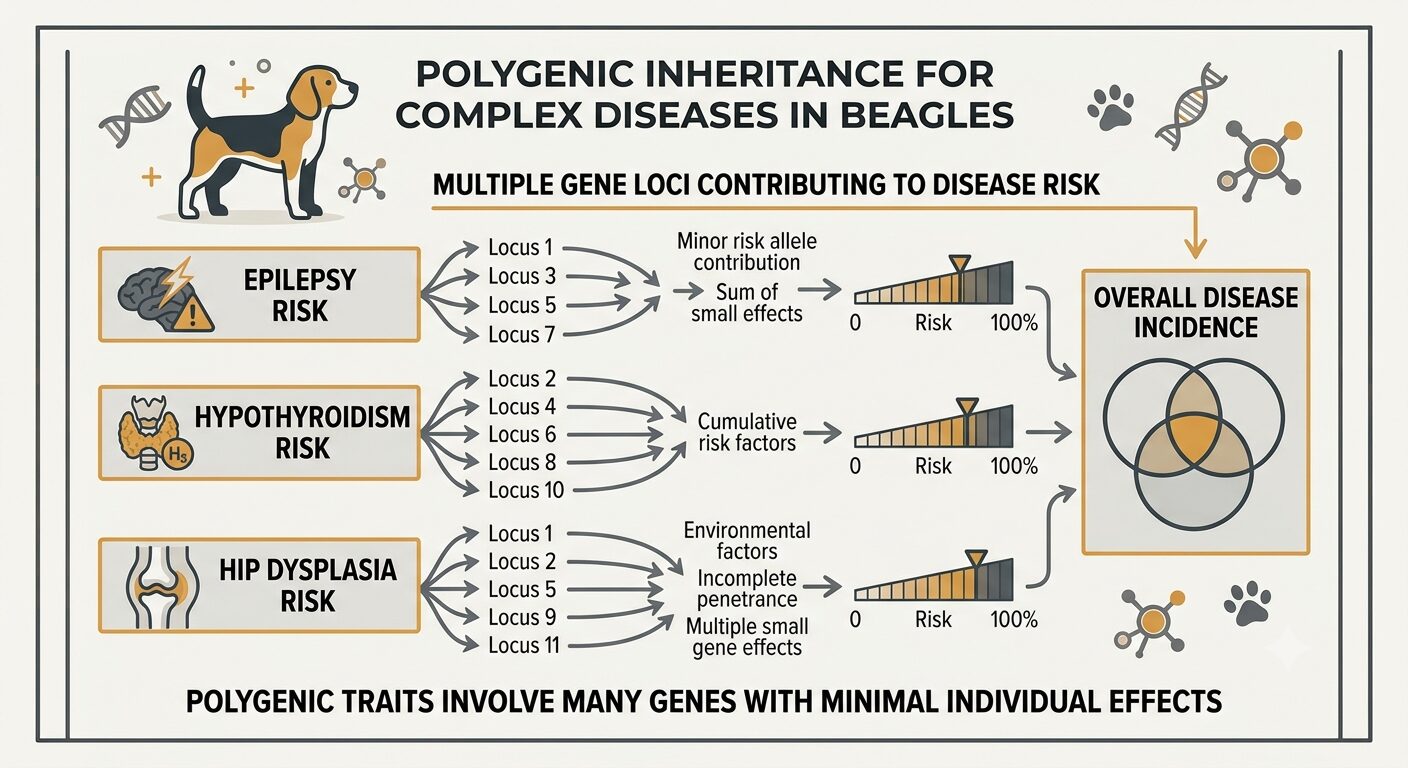
Beagles are notable for conditions that resist simple Mendelian genetic testing:
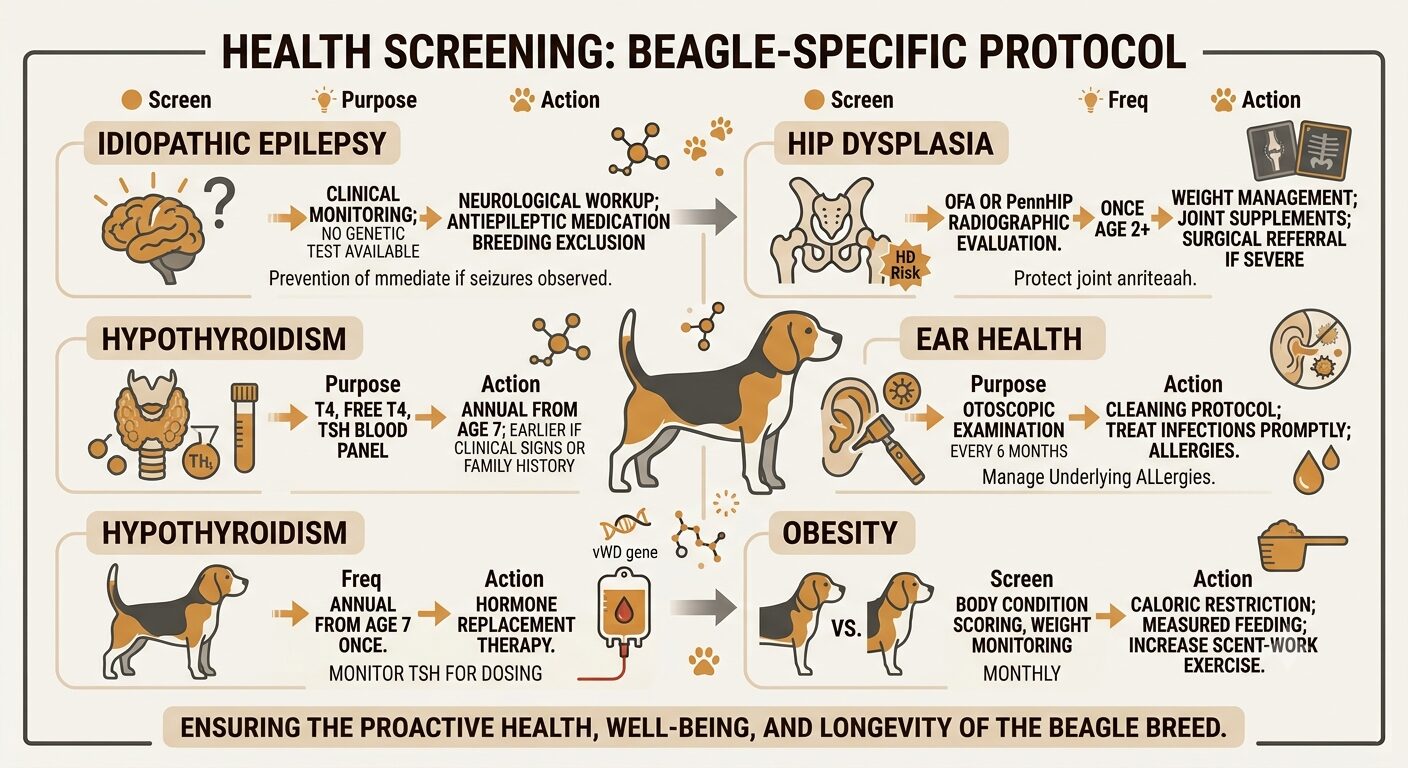
Epilepsy: Idiopathic epilepsy in Beagles has been studied extensively as a model for human epilepsy genetics. **Kearsley-Fleet et al. (2013) — Prevalence and Risk Factors for Canine Epilepsy** found Beagles among the breeds with highest epilepsy incidence, with onset typically between 1–5 years. The condition is strongly heritable but polygenic — no single causative mutation has been identified, and genetic testing is not currently predictive.
Hypothyroidism: Lymphocytic thyroiditis (autoimmune hypothyroidism) occurs at elevated rates in Beagles. **Graham et al. (2007)** identified genetic associations within the dog leukocyte antigen (DLA) complex — the canine major histocompatibility complex — suggesting immune-mediated mechanisms with genetic predisposition. As with epilepsy, this is not a single-gene disorder testable through commercial panels.
Hip Dysplasia: Despite their small-to-medium size, Beagles show hip dysplasia incidence comparable to larger breeds in some populations. This reflects the polygenic architecture of hip dysplasia — the same genes operate across size classes, and Beagles carry risk alleles without the protective effect of large-body selection for sound hips that operates in some working breeds.
Ear Infections (Otitis Externa): While not typically classified as genetic disease, Beagles show elevated otitis externa rates due to the interaction of: (a) long, pendulous ears (genetically determined ear carriage), (b) high skin lipids that support microbial growth, and (c) atopic dermatitis predisposition. This is a polygenic, multifactorial condition where genetics sets vulnerability and environment (humidity, swimming, allergies) triggers expression.
Life Stage Notes (Breed-Specific Only)
This section covers only where Beagle development diverges from the general pattern established in the Master Pillar...............................
Puppyhood (0–6 months)
Scent Drive Emergence
Beagle puppies show olfactory-directed behavior earlier than many breeds — nose-to-ground investigation begins as soon as mobility allows. This is the critical window for establishing scent-based training protocols.
Breed-specific guidance: Introduce scent games (find-it, tracking foundations) before formal obedience. A Beagle puppy trained through olfactory motivation learns faster and retains better than one forced into visual/auditory training models designed for cooperative breeds. Delayed socialization to varied scent environments may produce neophobia (fear of novel odors) that manifests as reluctance to explore.
Adolescence (6–18 months)
Independence and Roaming
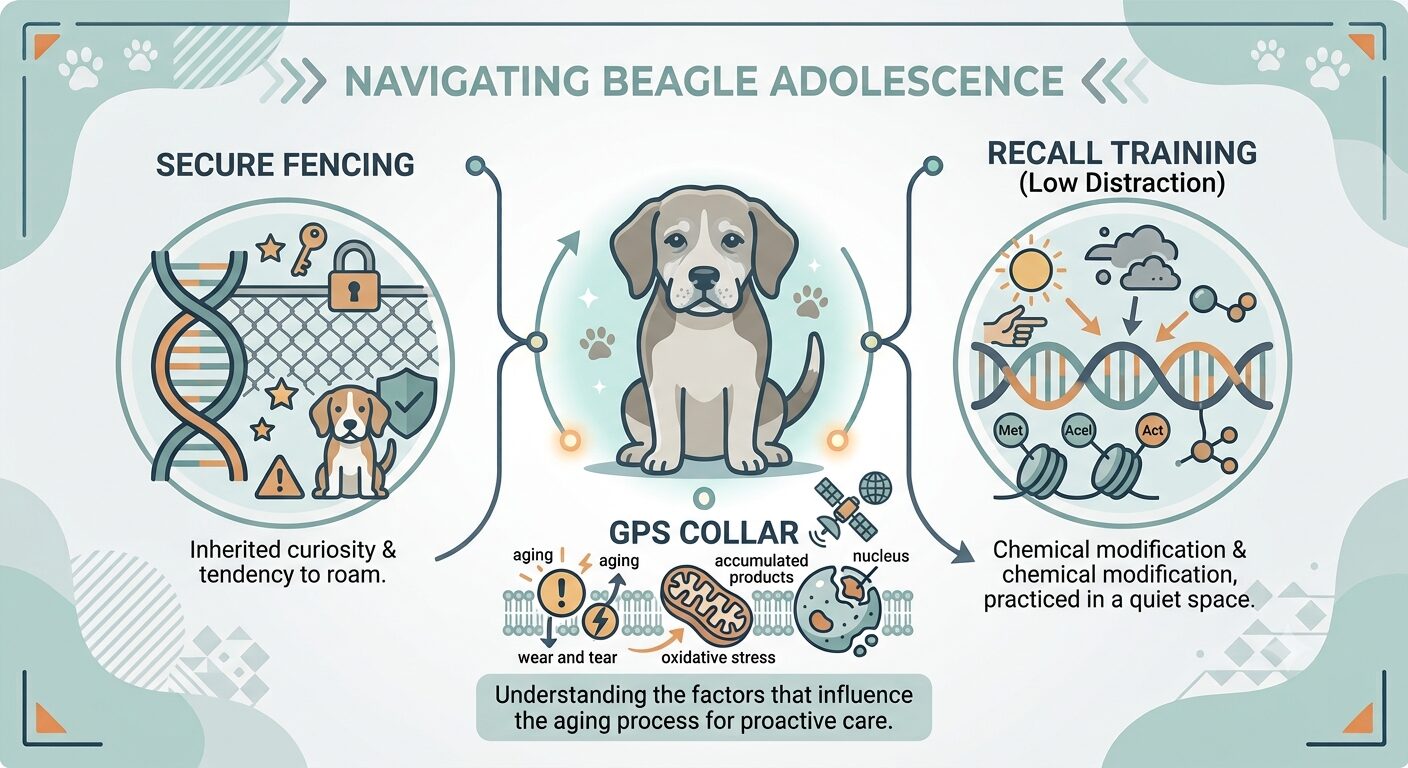
Adolescent Beagles experience intensification of genetically programmed ranging behavior — the tendency to travel independently while tracking scent. This is the peak period for escape, roaming, and traffic accidents in the breed.
Breed-specific guidance: Secure containment is non-negotiable. Beagles can clear 5-foot fences, dig under barriers, and exploit any gate latch weakness. GPS collars are advisable for off-leash activities in unfenced areas. Recall training should be practiced in low-distraction environments before any off-leash freedom is granted — and even then, a Beagle on a hot scent is operating from genetic programming that overrides training.
Red Flags — consult a professional trainer if you observe:
- Escalating escape attempts despite adequate exercise
- Aggression when prevented from following scent trails
- Inability to disengage from scent even for high-value rewards
- Extreme distress when confined during peak scenting conditions (dawn/dusk)
These may indicate that the dog's genetically determined drive exceeds what the current environment can accommodate — a mismatch requiring professional behavioral intervention rather than standard training.
Adulthood (1.5–7 years)
Epilepsy Surveillance and Weight Management
The peak incidence of idiopathic epilepsy in Beagles occurs during adulthood, typically ages 1–5. Early seizures are often misattributed to toxin exposure, hypoglycemia, or sleep disturbances.
Breed-specific guidance: Any unexplained loss of consciousness, rhythmic limb movement, or post-ictal confusion (disorientation, pacing, excessive thirst after an event) should prompt immediate veterinary evaluation. Beagles with first-degree relatives (parents, siblings) with epilepsy carry elevated genetic risk and should be monitored closely even if asymptomatic.
Weight management is simultaneously more critical and more difficult in Beagles than in many breeds. The same genetic drive for food that made them effective hunters in resource-scarce environments becomes pathological in food-abundant pet homes. Obesity exacerbates hip dysplasia risk, diabetes risk, and exercise intolerance — creating a feedback loop of declining health.
Senior Years (7+ years)
Hypothyroidism and Cognitive Monitoring
Autoimmune hypothyroidism risk increases with age in Beagles. Clinical signs include lethargy, weight gain despite reduced food intake, skin/coat changes, and behavioral depression. Because these signs overlap with normal aging, hypothyroidism is underdiagnosed in senior Beagles.
Breed-specific guidance: Annual thyroid panel (T4, free T4, TSH) is recommended for Beagles over age 7, even in the absence of clinical signs. Early diagnosis and hormone replacement therapy significantly improve quality of life and can reverse many apparent "aging" changes.
Research Spotlight
Hypothyroidism Genetics in Beagles
Study: Graham et al. (2007), Veterinary Immunology and Immunopathology — Identification of an MHC class II risk haplotype associated with lymphocytic thyroiditis in Beagles
Sample & Method: Case-control study of 97 Beagles with lymphocytic thyroiditis and 103 controls, genotyping DLA class II genes by PCR-RFLP and sequencing, with statistical analysis of haplotype associations.
Key Finding: Specific DLA-DRB1 and DLA-DQA1 haplotypes were significantly associated with lymphocytic thyroiditis risk, demonstrating that autoimmune hypothyroidism in Beagles has a genetic basis in immune system regulation — not random environmental trigger.
Why it matters here: This explains why hypothyroidism clusters in Beagle families and why "watch and wait" is inadequate for at-risk dogs. Guardians of Beagles with affected relatives should request annual thyroid panels from age 5, not wait for clinical signs. For breeders, it means thyroid health history across three generations is as important as any DNA panel — and that outcrossing to DLA-diverse lines may reduce autoimmune risk even without a genetic test.
Practical Application for This Breed
Scent-Appropriate Training and Enrichment
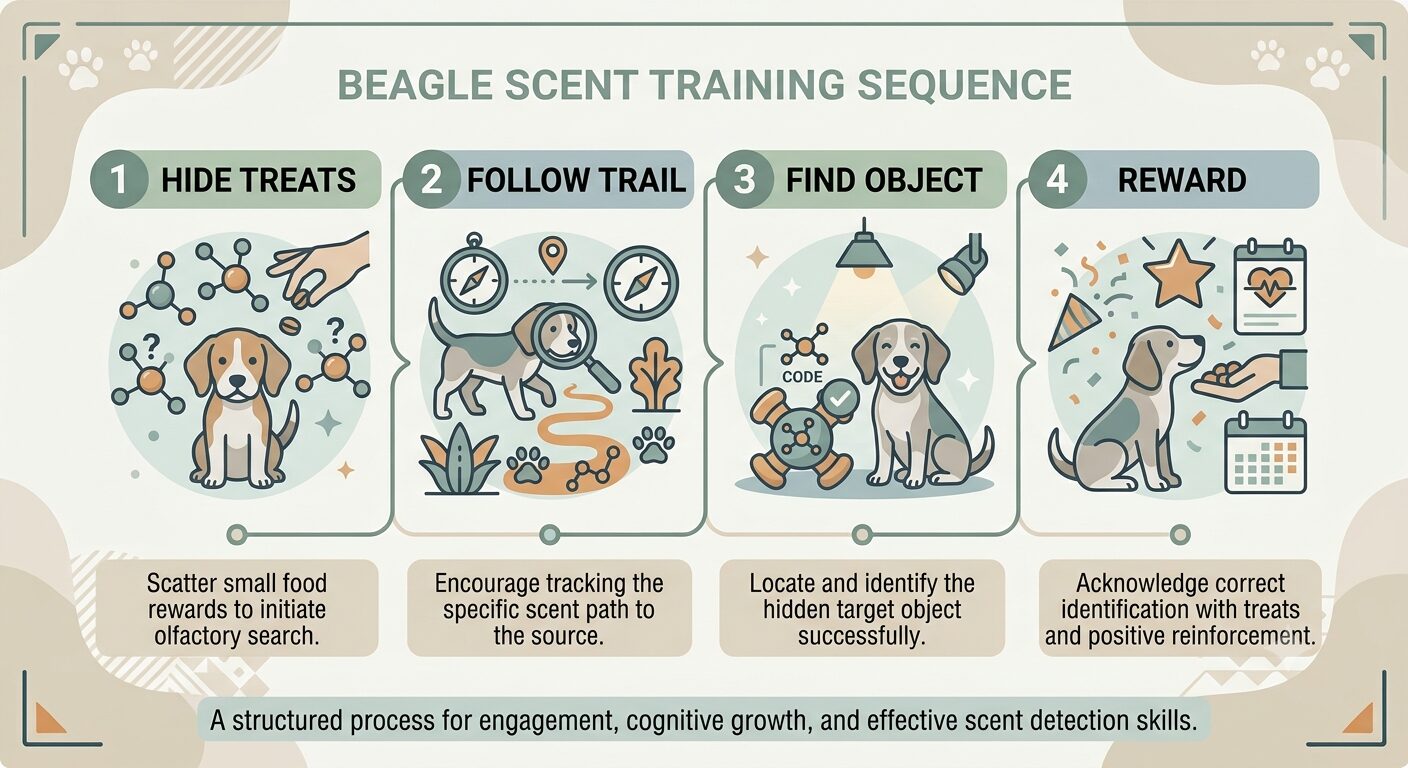
Working against a Beagle's olfactory genetics creates frustration for both dog and Guardian. Working with them produces reliable, contented dogs.
Foundation Protocol
- Scent before obedience: Teach all basic behaviors (recall, stay, leash walking) through scent-mediated rewards. Hide treats for "stay" releases; use scent trails for recall practice; reward loose-leash walking with access to interesting odors.
- Nosework as primary exercise: 20 minutes of structured scent work (find hidden objects, track laid trails) provides more mental fatigue than an hour of unstructured walking. A mentally tired Beagle is a calm Beagle.
- Food management: Measure all food; use portion-controlled puzzle feeders; never free-feed. The genetic drive to eat is not negotiable — the environment in which that drive operates must be controlled.
Success Criteria: Your Beagle responds reliably to recall in low-distraction environments; maintains healthy body condition without food obsession dominating their waking hours; shows contentment through nosework engagement rather than destructive behavior.
Health Screening
Beagle-Specific Protocol
Breeding Decisions
Managing Polygenic Risk
Beagle breeding presents specific challenges because the breed's most significant health risks are polygenic and not testable through simple DNA panels:
Epilepsy management: Because no genetic test exists, breeders must rely on pedigree analysis and phenotype screening. Dogs with affected first-degree relatives should not be bred. Dogs with affected second-degree relatives should be bred only to lines with no epilepsy history across three generations. This is imperfect but represents current best practice.
Hypothyroidism management: The DLA associations suggest immune-mediated mechanisms. Breeders should track thyroid health across generations and avoid matings that concentrate autoimmune risk.
Diversity preservation: Beagles retain higher genetic diversity than many breeds — this is a resource to protect. Avoid close inbreeding that would reduce diversity and concentrate polygenic risk. Outcrossing to genetically distinct Beagle lines (including European imports with different breeding histories) can maintain diversity.
Worked Example
Luna, a 3-year-old Beagle, began having seizures at age 2.5 — initially brief, infrequent episodes mistaken for sleep disturbances. By age 3, seizures occurred monthly and lasted 2–3 minutes. Her Guardian initially sought training help for "behavioral episodes" before veterinary diagnosis of idiopathic epilepsy.*
Genetic assessment: Luna's epilepsy is polygenic with strong heritability. No commercial test predicted this, but her sire's litter sister had produced an affected dog — information not shared because the breeder did not track extended pedigree health.
Intervention
- Medical: Neurological workup excluded structural causes; antiepileptic medication (levetiracetam) initiated
- Environmental: Consistent sleep schedule (sleep deprivation lowers seizure threshold); avoidance of strobe lights and strong chemical odors that may trigger photosensitive/olfactory-sensitive seizures
- Breeding decision: Luna was spayed; her breeder was informed and agreed to remove the sire from breeding pending extended pedigree review
- Monitoring: Seizure diary tracking frequency, duration, and potential triggers; medication levels monitored via blood work
Outcome
Seizure frequency reduced to 2–3 annually with medication. Luna's Guardian became an advocate for epilepsy disclosure in Beagle breeding, sharing Luna's pedigree information with breed health committees.
 Related Reading
 Related Reading
Genetics and Inheritance in the Companion Dog — the foundational science of inheritance patterns, polygenic traits, and genetic testing principles that this article applies to the Beagle.
Corgi Genetics and Inheritance — compare the Beagle's scent-hound genetics and polygenic disease risks with the Corgi's single-gene dwarfism mechanism to understand how different selection histories produce different genetic landscapes.
Canine Reproduction and Breeding Ethics — ethical frameworks for breeding decisions, particularly relevant given the Beagle's polygenic disease risks and the challenges of screening for conditions without genetic tests.
 Self-Check Questions
 Self-Check Questions
- Can you explain why a Beagle's "poor recall" may reflect genetically appropriate scent-driven attention rather than training failure?
- If your Beagle has a first-degree relative with epilepsy, what does that mean for breeding decisions and health monitoring?
- Why is obesity particularly dangerous for Beagles compared to other breeds of similar size?
- What distinguishes Beagle ear infection risk from simple "bad luck" — and what genetic factors contribute?
 1. Why do Beagles have such a strong sense of smell compared to other dogs?
 1. Why do Beagles have such a strong sense of smell compared to other dogs?
Beagles, like other scent hounds, retain higher proportions of intact olfactory receptor genes in subfamilies associated with long-range volatile compound detection. Their olfactory epithelium (smelling tissue) is proportionally larger, and their brains allocate more neural resources to scent processing. This is not training or individual talent — it is genetically determined sensory architecture optimized for tracking game across varied terrain.
2. Can I train my Beagle to have reliable off-leash recall?
Some Beagles achieve reliable recall, but it requires working with — not against — their genetics. Training must be scent-mediated, practiced progressively from low to high distraction, and reinforced throughout life. Even well-trained Beagles may override recall when following a high-value scent trail. GPS collars and secure fencing are essential safety backups. Expecting a Beagle to have Labrador-level off-leash reliability is genetically unrealistic.
3. What is idiopathic epilepsy, and why are Beagles at higher risk?
Idiopathic epilepsy is recurrent seizures without identifiable structural brain cause. Beagles show elevated incidence due to polygenic heritability — multiple genes each contributing small effects that combine to lower seizure threshold. No single genetic test exists. Onset is typically 1–5 years. Management involves antiepileptic medication and environmental trigger avoidance. Breeding decisions must rely on pedigree analysis rather than genetic testing.
4. Is there a genetic test for Beagle epilepsy?
No. Unlike Mendelian conditions (PRA, degenerative myelopathy), idiopathic epilepsy in Beagles is polygenic with no identified causative mutation. Research is ongoing through genome-wide association studies, but current commercial DNA panels cannot predict epilepsy risk. Breeders must use pedigree health history and phenotype screening. Guardians should monitor for early seizure signs and seek immediate veterinary evaluation.
5. Why is my Beagle always hungry, even after eating?
Beagles were selected for high food motivation to sustain energy during long hunts when food availability was unpredictable. This genetic drive is not satiety-responsive in the same way as less active breeds. In modern pet homes with constant food availability, this becomes pathological. Management requires measured feeding, puzzle feeders, and scent-based enrichment that provides satisfaction without calories. Free-feeding a Beagle almost guarantees obesity.
6. What health tests should my Beagle have before breeding?
Minimum recommended testing: hip dysplasia evaluation (OFA or PennHIP), thyroid panel (T4, free T4, TSH), cardiac examination, eye examination (CERF/ECVO), and genetic testing for available Mendelian conditions (PRA, MLS). Critically, breeders should also provide: three-generation epilepsy history, three-generation hypothyroidism history, and documentation of autoimmune conditions in pedigree. Because polygenic conditions lack genetic tests, pedigree transparency is essential.
7. Are Beagles healthier than other purebreds because they have more genetic diversity?
Beagles do retain higher genetic diversity than many bottlenecked breeds, which reduces risk of severe recessive disorders and inbreeding depression. However, this diversity also preserves ancient risk alleles for complex conditions (epilepsy, hypothyroidism, hip dysplasia) that are harder to select against. The result is fewer single-gene catastrophic diseases but higher incidence of polygenic, late-onset conditions. "Healthier" depends on which conditions you prioritize.
8. Why does my Beagle howl and bay instead of barking like other dogs?
Baying and howling are genetically fixed vocalizations for pack coordination at distance during hunts. These low-frequency, carrying calls allowed scattered pack members to maintain contact across terrain. This is not learned behavior or attention-seeking — it is ancestral communication genetics. Suppression is difficult and may cause frustration. Management involves providing appropriate outlets (scent work, pack play) and accepting that some vocalization is breed-typical.
9. Can genetic testing tell me if my Beagle puppy will be good at nosework or tracking?
No current test predicts olfactory performance. While Beagles as a breed have superior scent genetics, individual variation exists. Early puppy testing for scent interest (willingness to follow scent trails, persistence in searching) is more predictive than genetic markers. Select puppies that show early, sustained interest in scent games. Training and practice remain the dominant factors in developing tracking ability.
10. Why do Beagles get ear infections so frequently?
Three genetically influenced factors converge: (a) long, pendulous ears that trap moisture and reduce air circulation, (b) skin lipid composition that supports microbial growth, and (c) atopic dermatitis predisposition that creates inflamed, infection-susceptible ear canals. This is not "bad luck" — it is predictable genetic vulnerability requiring proactive management: weekly ear cleaning, prompt veterinary treatment of infections, and allergy management when indicated.
11. What is the difference between a "pocket Beagle" and a standard Beagle?
"Pocket Beagle" is a marketing term without genetic or breed standard recognition. Historically, smaller Beagles (under 13 inches) were used for hunting small game. Modern "pocket" or "teacup" variants are typically produced by selecting for small size within the breed or by crossbreeding with smaller breeds. There is no distinct genetic lineage. Extreme miniaturization may introduce health problems (patellar luxation, hypoglycemia) not typical of standard Beagles. The breed standard recognizes two size varieties (13-inch and 15-inch) with no genetic distinction between them.
12. Should I get pet insurance for my Beagle?
Given the polygenic disease risks (epilepsy, hypothyroidism, hip dysplasia) and the potential for lifelong medication and management, comprehensive pet insurance is advisable. Review policies for: coverage of hereditary conditions (some exclude them), lifetime vs. per-condition limits, and medication coverage. Obtain insurance before any clinical signs appear, as pre-existing conditions are typically excluded.
13. Can Beagles be trained as service dogs or therapy dogs?
Beagles can succeed in scent-detection service roles (diabetic alert, bedbug detection) where their olfactory genetics are an asset. They are less commonly successful in guide dog, mobility assistance, or psychiatric service roles requiring high biddability and low distractibility. Individual temperament varies, and some Beagles succeed in therapy work with specialized training. Breed tendencies should inform role selection rather than being treated as absolute barriers.
14. Why do Beagles tend to gain weight so easily?
Metabolic adaptations for sustained hunting energy expenditure — including efficient nutrient absorption and strong food motivation — become maladaptive in sedentary pet homes with abundant food. Beagles are among the breeds most prone to obesity, with studies showing higher adiposity and lower resting metabolic rates than predicted by body size. This is genetically influenced, not simply a matter of willpower. Strict portion control and regular scent-work exercise are essential management tools.
15. What does the future of Beagle genetics look like for disease prevention?
The Beagle's retained genetic diversity is a resource for future health improvement. Promising directions include: (a) polygenic risk scores for epilepsy and hypothyroidism that could identify high-risk individuals before clinical onset; (b) expanded DLA typing for autoimmune risk prediction; (c) pharmacogenomic testing to identify which antiepileptic medications an individual Beagle will metabolize best; and (d) international pedigree databases that track complex disease across generations. The breed's research importance (Beagles are commonly used in biomedical research) also means more genetic data is available than for many breeds — a resource that should benefit pet Beagle health.
Pingback:Genetics and Inheritance - TANYDD - Corgi Crew
Pingback:Evolutionary Roots of the Beagle - Tamboeckey Beagles
Pingback:Physical Development in the Beagle - Tamboeckey Beagles